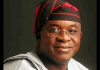


President Bola Tinubu’s appointment of Professor Joash Amupitan, SAN, as the new Chairman of the Independent National Electoral Commission (INEC) has stirred discussions around zoning, ethnicity, and national balance, with presidential aide Sunday Dare describing the move as a “commendable gesture of equity and inclusion.”
In a statement released on Friday titled “INEC Chairman: Making a Difference — A Choice Unanimous,” Dare praised the President for maintaining the tradition of regional rotation by retaining the INEC chairmanship in the North, this time the North-Central zone, even as the new appointee hails ethnically from the Yoruba-speaking community of Kogi State.
“President Tinubu deserves commendation for maintaining regional balance by retaining the chairmanship of INEC in the Northern region, this time the North-Central,” Dare stated.
“It bears repeating that no one from the South-West, where the President comes from, has ever occupied this crucial office. By choosing Professor Amupitan, the President reinforces his commitment to equity, inclusiveness, and national unity.”
The comment comes amid growing debate over whether Amupitan’s Yoruba heritage blurs the traditional zonal boundaries between North and South. Analysts note that while the new INEC boss is from Kogi State, constitutionally classified within the North-Central geopolitical zone, his ethnic roots reflect the complex diversity within Nigeria’s federal structure.
Political observers argue that the appointment could help ease tensions around ethnic representation in federal offices, particularly given past criticisms that the Tinubu administration favoured the South-West. By opting for a Yoruba technocrat from the North-Central, the President is seen to have balanced both regional rotation and ethnic inclusion.
Dare, however, emphasised that beyond ethnic considerations, the appointment symbolised a crucial opportunity to restore confidence in Nigeria’s electoral system. He urged Professor Amupitan to demonstrate “courage, transparency, and moral independence” in rebuilding trust in the Commission.
“The integrity of our elections rests squarely on the shoulders of the electoral umpire,” Dare said. “To safeguard democracy, the nation must be led in this sphere by a man whose character commands trust and whose conduct restores faith in the sanctity of the ballot.”
According to him, President Tinubu’s decision reflected both national consensus and strategic foresight, noting that the unanimous endorsement of Amupitan’s nomination by the National Council of State underscored his broad acceptance across political and civic lines.
Dare said the appointment “sends a strong message that competence, not ethnicity or partisanship, remains the determining factor in national service.”
Before his appointment, Professor Amupitan served as Deputy Vice-Chancellor (Administration) at the University of Jos and Pro-Chancellor of Joseph Ayo Babalola University. He is an expert in Corporate Governance, Company Law, and Evidence Law.