
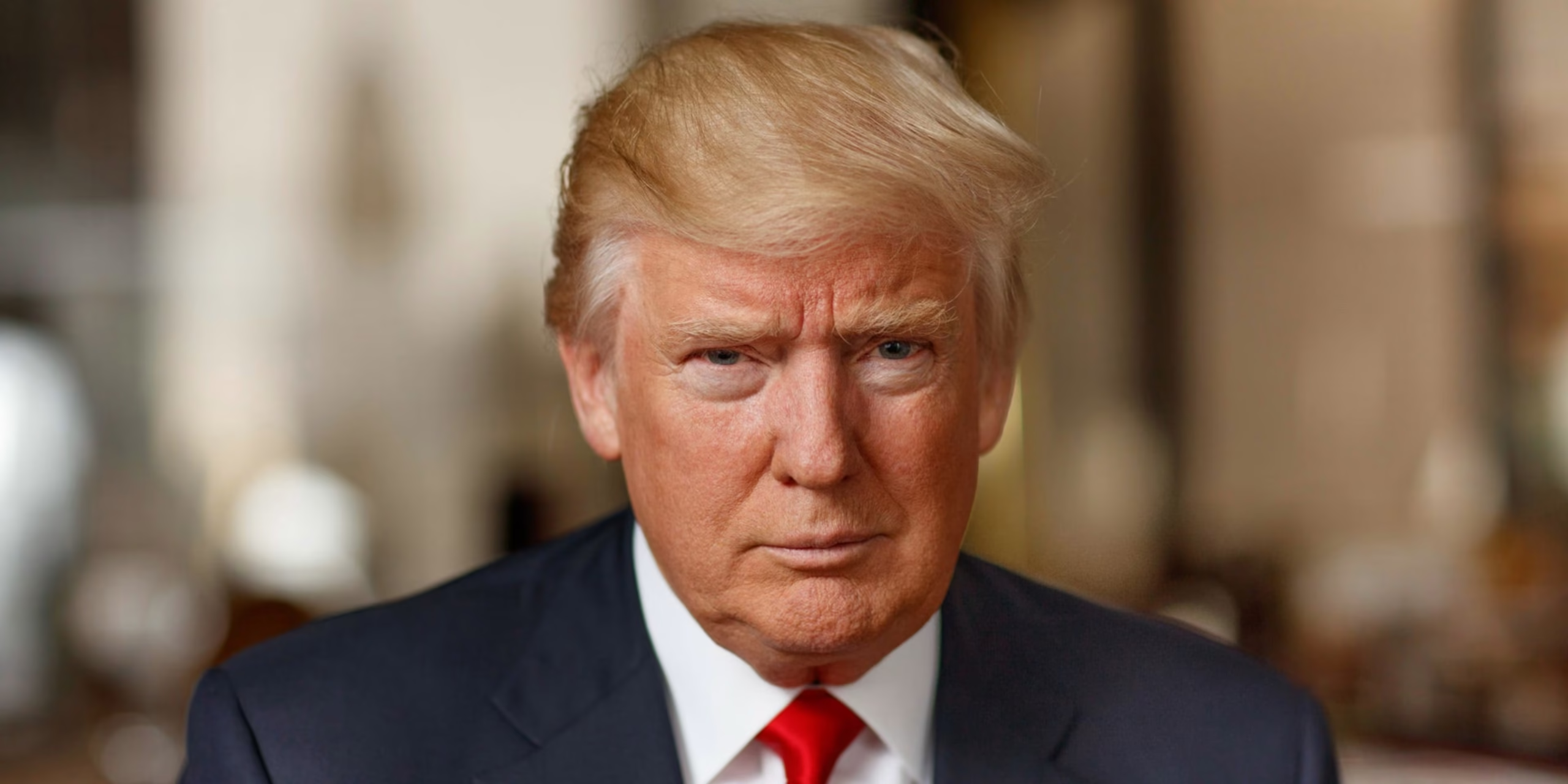
When the news broke that Nigeria had once again been designated by the United States government under President Donald Trump’s administration, many observers were quick to recall that this was not the first time. We were initially placed under the same designation in 2020, also during Trump’s tenure. Later, the Biden administration lifted the designation, presenting it as part of a shift in diplomatic tone and foreign policy strategy. What we are witnessing now is not a new action, but rather a redesignation, a return to a prior stance.
For some, this appears to be a straightforward diplomatic maneuver. But those who understand global politics, especially the strategic interests of powerful nations, know that actions like these often come with underlying motives and expectations. International politics is rarely about morality alone, it is about influence, economic benefit, and strategic advantage. And if we observe closely, we can trace a pattern in Trump’s engagements with Nigeria during his time in office, particularly in defense procurement.
During Trump’s first term, Nigeria purchased the A-29 Super Tucano fighter aircraft from the United States, a deal that was celebrated publicly as a step forward in combating insurgency. However, behind the celebration was the reality of economic and geopolitical exchange. The United States gained a major defense contract and strengthened its influence over Nigeria’s security architecture. The redesignation we are seeing now fits within that same pattern. It provides a diplomatic pretext, an avenue to make Nigeria feel obligated, pressured, or nudged into further military procurement deals, likely involving new and more advanced fighter jets or support systems.
In other words, this move can be seen as Trump positioning the ground for the Nigerian government to once again patronize the American defense market. To some observers, it may even appear as though we should be preparing a gift in advance, because Trump has, in his own way, reopened the door. But in reality, the “gift” he is expecting is not symbolic, it is financial and strategic. It is the kind of gift that comes through agreements, contracts, and long-term military and diplomatic dependencies.
Nigeria must approach this moment with clarity and strategic awareness. Our leaders should remember that international relations must be mutually beneficial. If the United States is positioning itself to sell us another set of warplanes or military technology, we must ask, What do we gain? Does it strengthen our autonomy? Does it improve security in a sustainable way? Or does it deepen reliance on external powers whose geopolitical motivations may shift tomorrow?
It is important for Nigeria to maintain strong global partnerships, including with the United States. But we must also recognize when such partnerships are being calibrated to serve the interests of the stronger party. Sovereignty means negotiating from a position of confidence, not desperation. Defense capability is valuable, but national dignity and strategic independence are even more valuable.
This moment calls for measured diplomacy, thoughtful negotiation, and a clear understanding that Nigeria should not simply walk into another procurement cycle without evaluating all implications. The world is watching, the region is observing, and our future security strategy is at stake.