
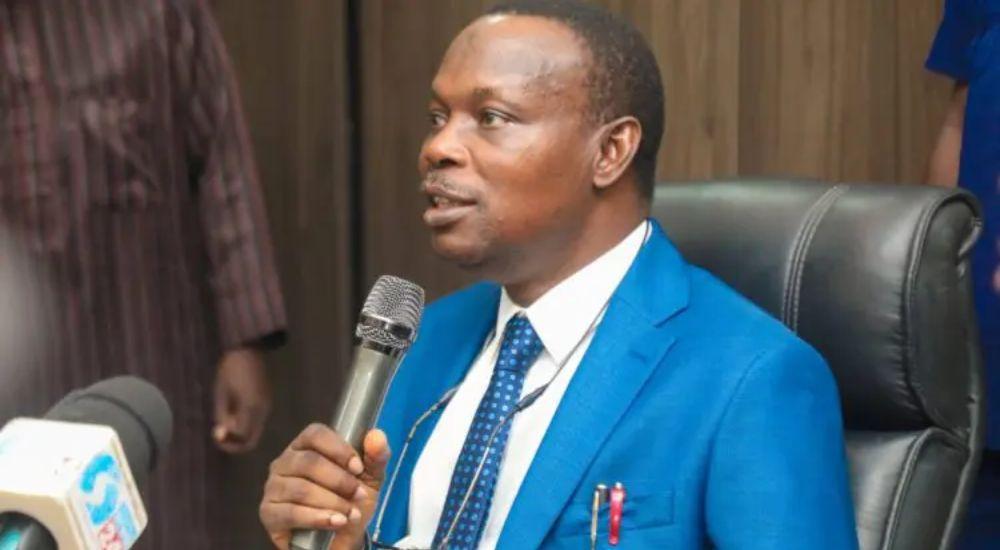
The Federal Government, through the Minister of State for Health and Social Welfare, Dr. Iziaq Salako, has definitively stated that placing medical and dental house officers on the civil service scheme is not possible because they are considered temporary trainees, not regular staff.
The Minister offered this crucial clarification during a press briefing in Abuja on Monday while addressing a major demand listed by the striking members of the Nigerian Association of Resident Doctors (NARD).
NARD’s ongoing industrial action includes a total of 19 demands, chief among them the call to integrate house officers into the civil service scheme, a policy which the union argues has deprived them of rightful emoluments, professional recognition, and timely salary payments. However, Dr. Salako countered that such an inclusion would prove “impractical” and introduce severe administrative and financial complications into the system.
The Minister explained that house officers are newly graduated medical doctors undergoing a mandatory one-year internship at federal health institutions. He stressed that their temporary status fundamentally disqualifies them from civil service entitlements.
“Medical and dental house officers are newly graduated doctors, either medical or dental, who are on internship for one year—which is 12 months—so they are not regular staff. They are engaged temporarily for 12 months. Therefore, it is not possible for them to be seen as regular staff,” Dr. Salako asserted. He then posed a rhetorical question about one of the key benefits enjoyed by permanent civil servants: “Would they be enjoying a pension, for example, because that is one of the key things that is enjoyed by every civil servant?”
He further elaborated on the impossibility of integrating trainees into the pension system: “Of course, we cannot put house officers on the pension scheme because they are on training, and that training, which is an intensive one, is for 12 months.” Upon completing this year of training, the officers move on to their youth service, after which, “Those who want to join the service can then do so properly, while others may pursue other opportunities.”
Dr. Salako warned that including them in the civil service structure would be detrimental: “So, we’ve explained to the Nigerian Association of Resident Doctors that putting house officers on the civil service scheme will create more problems than it will solve.”
He added a critical note on the administrative challenge: “That would mean putting them on the same platform that pays other civil servants, and when they leave, some of them might still get paid. To exit that platform takes some processes.” The Minister also pointed out that this training arrangement is not unique to doctors: “We have also explained that it is not only doctors who do an internship. Internship is done by other categories of health workers—nurses, pharmacists, and physiotherapists.”
Regarding the controversy surrounding the creation of a consultant cadre for non-medical doctors, Salako clarified that this policy was inherited. “This was not done by this government; we inherited it. So, we believe that the only way to move forward around it is through mutual discussion among those affected, so that everybody can go back to work and function in harmony,” he noted.
The government is also taking steps to address the issue of five resident doctors dismissed from the Federal Teaching Hospital, Lokoja. Salako disclosed that “Two of the affected doctors had faced a properly constituted disciplinary committee in line with the public service rules.” He revealed a review committee has been set up for their cases: “Their cases have now been referred to a three-man committee headed by the Chairman of the Federal Teaching Hospital, Lokoja, with an external consultant and a representative from the Department of Human Resources in the Ministry as members. The committee will take a second look to determine whether they were truly dismissed unjustly.” For the remaining three, the Ministry has agreed to reabsorb them, provided “they are willing to work at facilities other than the Federal Teaching Hospital, Lokoja, at least for now.”
Dr. Salako pleaded with the doctors to end their strike and resume duties, emphasizing that the Ministry is actively working to resolve their concerns. “So, we have communicated that to the leadership of NARD. By and large, the point I’m trying to make is that we have not been sitting idly, contrary to some of the information being pushed out. We have been addressing these issues one by one, and for some, we have already found solutions—or at least a pathway to them,” he said.
He reminded NARD that the ongoing Collective Bargaining Agreement (CBA) requires the absence of an industrial dispute: “Our appeal is for the resident doctors to go back to work. The Collective Bargaining Agreement (CBA) is ongoing. As I said, one of the key conditions of the CBA is that while it is ongoing, there should not be an industrial dispute.” He urged them to respect the process: “We would like the resident doctors to respect this condition, and also respect the efforts that the ministry is making by going back to work.”
Closing his remarks, the Minister paid tribute to the dedication of healthcare professionals: “We in the Federal Ministry of Health and Social Welfare value their contributions, and I know that Mr. President especially values the contributions of our health workers, including doctors and resident doctors. If it were possible, we would pay them ₦50 million per month, because truly, nobody can adequately pay for the service of a health worker,” he added.
Despite the ongoing strike, the Chief Medical Director of the Federal Medical Centre, Keffi, Dr. Yahaya Adamu, reported that contingency plans are in place. Dr. Adamu, who is also the Vice Chairman of the Committee of Chief Medical Directors, confirmed that consultants had been mobilized to maintain essential services.
“From our reports this morning, most federal tertiary hospitals have maintained their clinics, though not at full capacity,” he confirmed, assuring the public that critical care continues: “Patients on admission, especially critical cases, are being managed until they are fit for discharge. We appeal to the public for understanding and urge those with emergencies to still visit our facilities; we are there to attend to them,” he stated.