
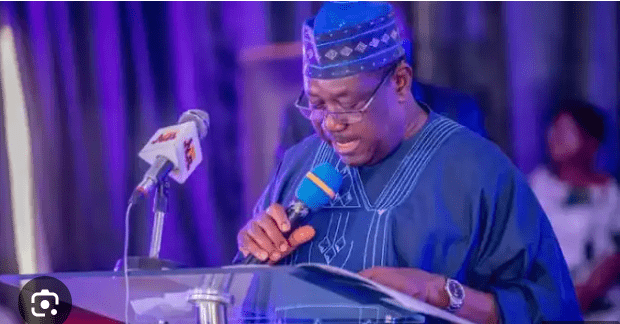
The Federal Government on Wednesday attributed the recent surge in terror attacks across Nigeria, including the mass abduction of schoolgirls in Kebbi State and the deadly assault on worshippers in Eruku, Kwara State, to remarks made by the United States President, Donald Trump.
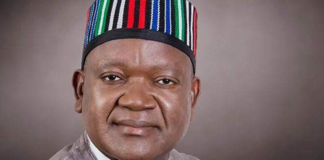
As national outrage over the security incidents mounted, Secretary to the Government of the Federation (SGF), George Akume, spoke on the evolution of violence and ongoing security challenges, arguing that President Trump’s posts alleging “Christian genocide” in Nigeria had “inadvertently emboldened opportunistic violent groups” now exploiting the narrative.
Akume detailed how the US President’s statements, which included threatening to deploy American forces to Nigeria, had provided cover for criminal elements.
“Recent pronouncements from the United States have inadvertently emboldened opportunistic violent groups seeking to exploit international narratives and make bold statements by attacking soft targets,” Akume said on Wednesday.
He stressed that the timing of the violence was significant, noting, “Before these statements, insurgency structures had been significantly degraded and reduced to isolated banditry.” Akume added that the current spate of violence “underscores the vital need for collaboration, not public labelling, between Nigeria and the United States.”
The SGF’s remarks came after President Trump, in a series of posts on X between October 30 and November 1, 2025, designated Nigeria as a “Country of Particular Concern” over the allegations of a Christian genocide. President Trump also warned that he might deploy American forces to Nigeria if the alleged killings of Christians did not stop and threatened to suspend all U.S. assistance if President Bola Tinubu’s administration failed to address the alleged persecution. He had also directed his so-called “Department of War” to prepare for “possible action” should the violence persist.
Akume firmly rejected the claims describing the conflict as a “Christian genocide.” He emphasized that Nigeria is a secular state and that government appointments reflect the country’s diversity.
“Nigeria is a secular state as guaranteed by various provisions of the constitution of the Federal Republic of Nigeria 1999 as amended,” the former Benue governor argued. “No state religion is adopted as a national religion and no citizen of Nigeria is above the Nigerian constitution.”
He also highlighted the balanced representation in government: “The appointment made by the present administration reflects the diversities of our nation and both Christians and Muslims and members of the Federal Executive Council holding key positions in equal proportion, including the Nigerian security council, the body that deals with all security challenges in Nigeria.”
Akume insisted that the government rejects any characterisation of the conflict as a genocide against any group, stating, “Verified evidence shows that insurgents and criminal networks attack both churches and mosques, killing Muslims and Christians alike.” He noted that the government remains committed to protecting all citizens and strengthening cooperation with international partners.
Addressing the threat of foreign intervention, the SGF reaffirmed the government’s position that Nigeria does not require foreign troops.
“The Nigerian Armed Forces are highly capable, experienced and professional. They have reclaimed vast territories, degraded Boko Haram/ISWAP leadership structures, and conducted successful multi-theatre operations,” Akume stated, adding that what is required is targeted assistance. “Nigeria does not require foreign troops. What is needed is targeted support from partners, especially the United States, in the areas of intelligence cooperation, technology and military equipment support for advanced engagement against the insurgents,” Akume concluded.