


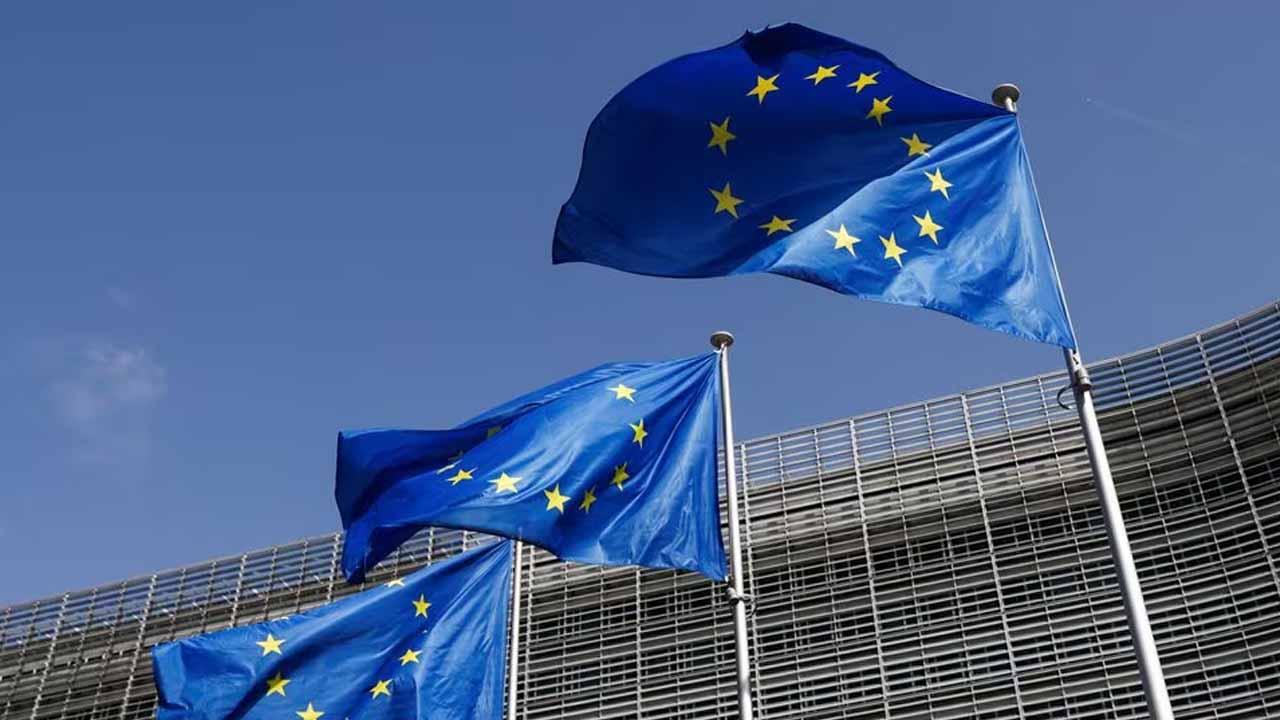
European Union (EU) institutions achieved a crucial agreement on Wednesday to impose a total ban on the import of Russian gas, with the complete phase-out mandated to occur no later than November 1, 2027. This landmark deal marks the final legislative step in the bloc’s sustained effort to sever a lucrative financial lifeline for Moscow following the invasion of Ukraine.
Following the all-night negotiations that sealed the compromise between EU member states and the European Parliament, the atmosphere was triumphant. EU chief Ursula von der Leyen immediately hailed the moment, declaring: “This is the dawn of a new era, the era of Europe’s full energy independence from Russia.”
Echoing her sentiment, EU Energy Commissioner Dan Jorgensen took to X (formerly Twitter) to celebrate the outcome: “We’ve made it: Europe is turning off the tap on Russian gas, forever. We’ve chosen energy security and independence for Europe. No more blackmail. No more market manipulation by Putin. We stand strong with Ukraine.”
Phased Approach Targets Both Pipeline and LNG
The accord, which aims “to end dependency on Russian energy following Russia’s weaponisation of gas supplies with significant effects on the European energy market,” as stated in a European Council statement, introduces a tiered phase-out schedule:
Long-Term Pipeline Contracts: These agreements, often running for decades, will be prohibited from September 30, 2027, provided Europe’s gas storage levels are deemed sufficient, with a final deadline of November 1, 2027.
Liquefied Natural Gas (LNG) Contracts: Long-term LNG imports will be banned starting January 1, 2027, aligning with calls from Commission President Von der Leyen to tighten sanctions.
Short-term contracts are scheduled to end earlier, with the ban for LNG starting on April 25, 2026, and for pipeline gas on June 17, 2026. The EU has also provided a legal mechanism for companies to manage existing commitments, allowing European firms to invoke “force majeure” to legally justify breaking current contracts, citing the EU import ban.
The Kremlin Response and The Hungarian Sticking Point
The decision drew immediate fire from the Kremlin, which hit back, saying the move would “accelerate” a decline of the EU’s economy as it would force the bloc to resort to more expensive alternatives.
Despite the comprehensive nature of the ban, the deal was complicated by the need to secure consensus, particularly regarding Russian oil. The agreement includes a provision calling on the European Commission to draft a separate plan in the coming months to end Russian oil imports to Hungary and Slovakia by the end of 2027.
This necessity arose because Hungarian Prime Minister Viktor Orban, the EU leader closest to the Kremlin, recently demonstrated his resistance by vowing to keep importing Russian hydrocarbons during a meeting with President Vladimir Putin last month. The two landlocked countries had previously received exemptions when the bloc moved to restrict Russian oil in 2022.
Europe’s Energy Transition Progress
Nearly four years after the Russian invasion of Ukraine, the EU is seeking to fully cut off Moscow’s lucrative energy income. The bloc has made significant strides in reducing its dependency: the share of Russian gas in total EU imports has dropped dramatically from 45 percent in 2021 to 19 percent in 2024.
However, the reduction in pipeline gas has been partially offset by an increase in seaborne LNG imports. In 2024, Russia still accounted for 20 percent of total EU LNG imports—approximately 20 billion cubic meters out of 100 billion. These LNG imports from Russia were still expected to generate 15 billion euros for the country this year.
The timeline set by the deal requires final, formal approval from both the European Parliament and member states before it becomes law.






















 institutions achieved a crucial agreement on Wednesday to impose a total ban on the import of Russian gas)