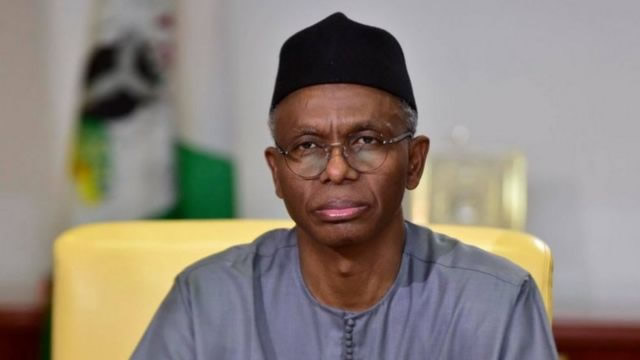

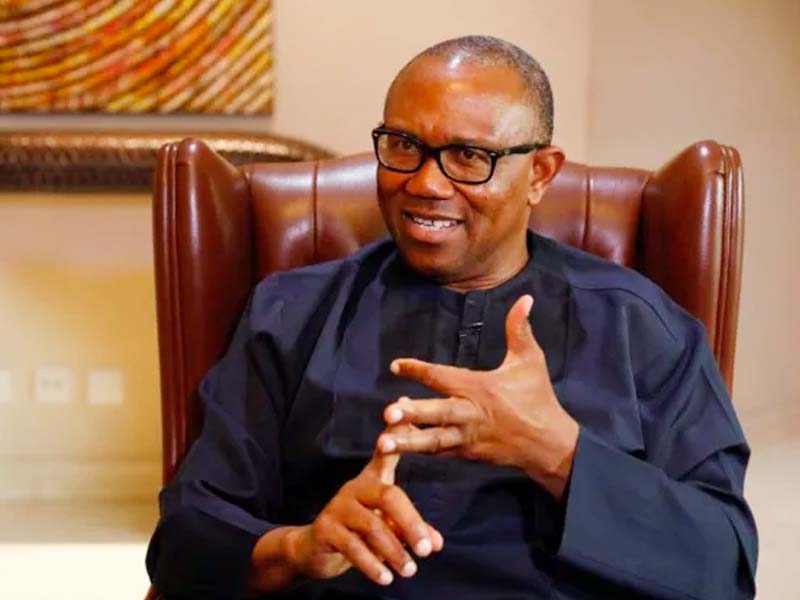
Former Labour Party presidential candidate, Peter Obi, has faulted Nigeria’s current tax framework, warning that prosperity cannot be achieved by imposing heavier burdens on poor citizens.
Obi, who defected to the African Democratic Congress (ADC) on Wednesday, made his position known in a post on X on Friday, where he called for transparency, fairness, and people-centred fiscal policies.
“Prosperity cannot come by taxing poverty. As I travel the world and meet leaders who have transformed their nations, one lesson is clear: lasting economic and social progress begins with national consensus,” Obi wrote.
He argued that transformative leadership must be rooted in honesty and transparency, stressing that taxation should function as a genuine social contract between government and citizens.
“Government must be transparent and truthful because citizens deserve nothing less. True leaders do not exploit their people to enrich themselves and a few cronies; they build trust, unity, and shared purpose,” he said.
Obi expressed concern over what he described as manipulation of the new tax law, alleging that the version gazetted differed from what was passed by the National Assembly. He warned that citizens were being asked to pay higher taxes under a framework lacking legitimacy.
He also emphasised the importance of supporting small and medium-sized enterprises, arguing that economic growth is driven by production rather than excessive taxation.
“You cannot tax your way out of poverty, you must produce your way out of it,” he said.
Meanwhile, Chairman of the Presidential Committee on Fiscal Policy and Tax Reforms, Taiwo Oyedele, sought to clarify misconceptions, assuring that the reforms would not involve automatic debits from personal bank accounts or require narrations for transfers.
President Bola Tinubu reaffirmed that implementation of the new tax laws would proceed as scheduled, describing the reforms as a “once-in-a-generation opportunity” to build a fair and competitive fiscal foundation.
Signed into law in June 2025, the reforms aim to simplify Nigeria’s tax system, broaden the tax base, and protect low-income earners and small businesses. Key provisions include exemptions for individuals earning ₦800,000 or less annually, relief for small businesses with turnover below ₦100 million, and reduced corporate tax rates for larger firms.
Despite ongoing controversies and court challenges, the government insists the reforms are designed to ease tax pressures, support enterprise, and promote a fairer, more transparent system capable of driving economic growth.