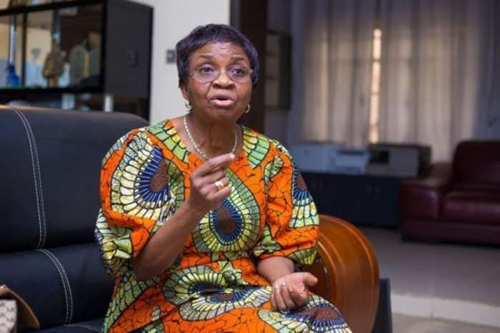

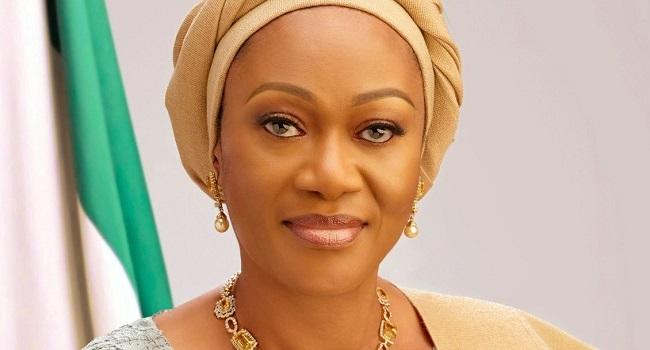
Former United States President Donald Trump publicly acknowledged Nigeria’s First Lady, Senator Oluremi Tinubu, on Thursday during his address at the National Prayer Breakfast in Washington, DC, drawing attention to her religious leadership and influence within the Christian faith.
The high-profile annual gathering, which brings together members of the US Congress, faith leaders and international dignitaries, saw Trump single out the Nigerian First Lady from the audience while speaking on faith, leadership and religious freedom across the world.
In his remarks, Trump said: “We’re honoured to be joined today by the First Lady of Nigeria, who also happens to serve as a Christian pastor at the largest church in Nigeria. A very respected woman. First Lady, please, where are you? Thank you very much. It’s a great honour. Thank you very much. Very respected person, too. Thank you,” as he scanned the hall in her direction.
Senator Tinubu is an ordained pastor of the Redeemed Christian Church of God (RCCG), one of Nigeria’s largest Pentecostal churches, led by Pastor Enoch Adeboye and known for its extensive global presence.
Trump’s comments came against the backdrop of heightened international focus on Nigeria’s security and religious dynamics, following earlier assertions by him and some US lawmakers that Christians in Nigeria are being targeted for violence.
In October 2025, Trump designated Nigeria a “country of particular concern” over alleged persecution of Christians, a declaration that sparked strong reactions from Nigerian authorities, who dismissed the claims as misleading and detrimental to national cohesion.
The Federal Government has consistently maintained that Nigeria’s security challenges stem from terrorism, banditry and other forms of criminality that affect citizens regardless of religious affiliation. It has also reiterated that the country’s constitution guarantees freedom of religion for both Christians and Muslims.
The disagreement over the narrative around Nigeria’s security situation later prompted a hearing at the US Congress, as well as renewed diplomatic and security engagements between both countries. These efforts eventually led to enhanced bilateral cooperation, including the establishment of the US–Nigeria Working Group aimed at addressing shared security concerns.