
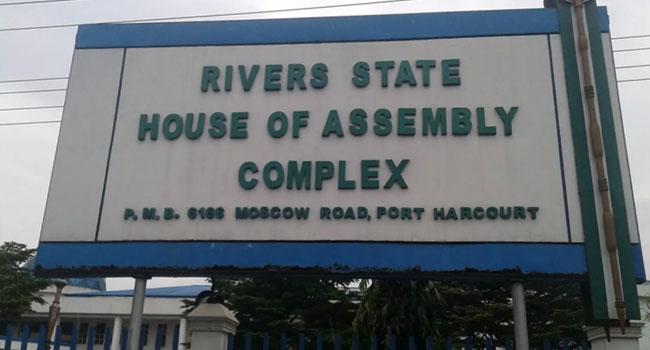
The Rivers State House of Assembly has put on hold impeachment proceedings against Governor Siminalayi Fubara and his deputy, Ngozi Odu, following legal and political complications.
During Thursday’s plenary, Speaker Martins Amaewhule announced that the process would remain stalled pending the outcome of ongoing court cases and consultations.
The impeachment drive, initiated in January, accused the governor of gross misconduct, including demolishing the Assembly complex, engaging in extra-budgetary spending, withholding funds for the Assembly Service Commission, and disobeying a Supreme Court ruling on legislative financial autonomy.
Deputy Governor Odu faced separate allegations of unconstitutional expenditure and obstructing Assembly functions.
However, the move quickly ran into judicial obstacles. Rivers State Chief Judge Simeon Chibuzor-Amadi declined to set up the constitutionally required seven-member investigative panel, citing an interim injunction from the High Court that restrained further action. Justice Florence Fiberesima’s order, issued on January 16, barred the Chief Judge, Speaker, and Clerk from advancing the impeachment after suits were filed by Fubara and Odu.
The impeachment push also drew criticism from the Rivers State chapter of the APC, which described it as destabilising, and sparked reactions across political circles.
Meanwhile, President Bola Tinubu recently intervened to broker peace, holding a closed-door meeting with Governor Fubara and FCT Minister Nyesom Wike, his political godfather. Wike confirmed the meeting, saying it was aimed at resolving the crisis and expressed hope that the President’s mediation would bring lasting stability.
This marks the second impeachment attempt against Fubara and Odu, following a similar move in March 2025 during a rift with Wike. That earlier crisis escalated to the point where Tinubu declared a state of emergency, suspended the governor, deputy, and lawmakers, and appointed a sole administrator. Fubara later returned to office after reconciliation six months later.
The political climate shifted further in December when Fubara defected from the PDP, under which he was elected in 2023, to the ruling APC—adding another layer to Rivers State’s volatile political landscape.