
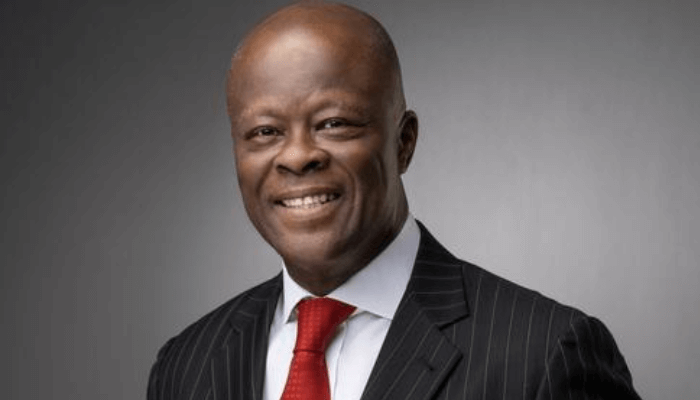
The revered British monarchy has conferred on Nigeria’s Minister of Finance and Coordinating Minister of the Economy, Wale Edun the title of Commander of the Royal Victorian Order.
The award was bestowed on him by Princess Catherine, on behalf of King Charles at an investiture ceremony which held at Windsor Castle on Wednesday.
The honour, which is traditionally reserved for individuals who have distinguished themselves in service to the British Crown, places Edun in rare global company and underscores the international respect his public service commands.
The ceremony, which also recognised figures such as Lydia Tischler, a Holocaust survivor and child psychotherapist; Rhys McClenaghan for services to gymnastics; and John Whiston for services to broadcasting, carried deeper resonance for Nigeria.
Edun was honoured not only as a former trustee of the Duke of Edinburgh’s International Award, but as a public servant whose career has bridged global engagement and national reform.
As Coordinating Minister, Edun has emerged as the quiet engine room of reform, consolidating difficult macroeconomic decisions into measurable stability. Foreign direct investment is rising as investors respond to clearer exchange-rate management and disciplined fiscal coordination. Nigeria’s foreign reserves have strengthened, offering resilience against external shocks, while inflation — after the initial surge triggered by subsidy removal and exchange-rate unification — has begun to trend downward, restoring confidence across markets.
International confidence has followed. Nigeria’s hosting of the 2026 Technical Meeting of the Intergovernmental Group of Twenty-Four (G-24) in Abuja was widely seen as a vote of trust in the country’s reform trajectory. At the meeting, Edun framed the discussions around access to capital, debt sustainability, and growth — issues directly tied to Nigeria’s infrastructure drive, investment climate, and job creation agenda.
Global financial institutions have been equally affirming. World Bank Managing Director of Operations Anna Bjerde recently described Nigeria as a global reference point for “steady, credible reform leadership,” noting that consistency over the past two years has rebuilt investor confidence and shifted the narrative from uncertainty to results. Edun himself has been clear-eyed about the task ahead, stressing at the Al Ula Conference for Emerging Market Economies in Riyadh that Nigeria’s reforms are working, but must be sustained to deliver long-term resilience.
For close observers, Edun’s current role is the culmination of a governance journey that began decades earlier in Lagos State. As a commissioner in Lagos State under then-Governor Bola Ahmed Tinubu, he was part of the reformist team that laid the foundations for Lagos’ fiscal strength, revenue expansion, and institutional discipline. The lessons from that period — policy clarity, realistic budgeting, and an insistence on implementation — now inform his national strategy.
Energy-led growth, improved revenue assurance through digital tools, and tighter fiscal–monetary coordination form the backbone of his approach today. Under his watch, Nigeria has positioned electricity access and infrastructure delivery as catalysts for productivity, industrial expansion, and inclusive growth, while maintaining a reform course that international partners increasingly view as credible and irreversible.
Seen in that light, the investiture at Windsor Castle was more than ceremonial. It was a global acknowledgement of a public servant whose influence spans continents — and whose most consequential work is unfolding at home. As Nigeria navigates reform in a volatile global economy, Edun’s steady hand continues to translate policy into confidence, and reform into results.