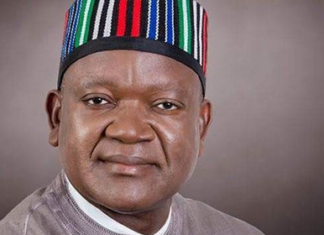


Social media users have dragged comedian Seyi Law following his recent comments that Nigeria is now safer than 10 years ago because President Bola Tinubu has successfully tackled insecurity in the country.
The comedian who made the comments while speaking on ‘The Honest Bunch Podcast’ on Sunday, also affirmed his support for Tinubu, insisting that the current administration has made significant gains in the securing the country.
Nigerian comedian, Seyi Law, has sparked fresh debate after declaring that Nigeria is safer today than it was a decade ago.
When asked by co-host of the Podcast, Daddy Freeze, if the country is safer now than 10 years ago, Seyi Law said:
“Nigeria is safer now than 10 years ago,” arguing that the Tinubu-led government has neutralised more bandits than previous administrations since the era of former President Goodluck Jonathan.
The comic also questioned critics of the President, asking when last Nigerians heard of widespread bomb blasts, suggesting that the scale of terror seen during the peak of the Boko Haram insurgency has reduced.
However, the remarks did not sit well with many Nigerians who took to X to castigate him for making what they see as insensitive comments as different parts of the country is still experiencing serious insecurity challenges including kidnappings, killings and destruction of communities.
Read some of the comments below:
@Chryx: “Seyi Law should stick to comedy. People are being kidnapped daily, villages attacked, and soldiers killed. Saying Nigeria is safer now is an insult to victims of insecurity.”
@Kensman: “It’s totally insulting and tone-deaf for him to say that. While people are being kidnapped, villages are under attack, and soldiers are dying, he’s out here spinning fairy tales like everything is fine.
“Comedy doesn’t give you a free pass to ignore reality, this isn’t a punchline of his dead career, it’s people’s lives. Claiming “progress” while citizens live in fear makes him look clueless at best and reckless at worst.”
@Hon. Uzinyia: “Funny how he has never been funny. When he was in comedy he wasn’t funny and now in politics he’s still not funny.
“I wonder when he will be funny, his tribe favored him alot and that’s why he thinks he can come out and say.”
@Kenny: “This claim by Seyi Law is not just misguided, it’s dangerously out of touch with reality. To say Nigeria is safer now than 10 years ago is an insult to the countless families living in fear of bandits, kidnappers, and violent insurgents.
“The truth is painfully clear: attacks in the Northeast continue, k+dnappings are rampant, and ordinary citizens are forced to fend for themselves while security forces struggle to contain the chaos.
“Downplaying the ongoing insecurity ignores the bloodshed, the lost lives, and the trauma inflicted daily on Nigerians.
“Safety isn’t measured by the absence of headlines alone, it’s felt in neighborhoods, villages, and homes where fear is constant.
” Spinning this narrative as “progress” is reckless and does a disservice to the millions still living under threat. Nigeria is not safer; it is crying out for accountability, decisive action, and real protection for its people.”
@Joyce Oscar: “But the reality on the ground tells a different story. Kidnappings, attacks, and insecurity are still very real for many Nigerians. Safety improvements can’t just be in numbers; they must be felt by everyone.”
@HenryMooore1: “Security in Nigeria isn’t something you judge with vibes or political loyalty, you judge it with data and lived realities.
“Yes, the era of frequent large-scale bomb blasts like during the peak of Boko Haram under Goodluck Jonathan has reduced. But insecurity has evolved, mass k!dnappings, banditry, farmer-herder clashes, and attacks on military formations are still happening across several states.
“So the real question shouldn’t be “Is it safer?” but “Safer for who and where?” Many Nigerians still travel with fear, pay ransom, or avoid certain roads entirely.
“That doesn’t reflect a country that feels secure.
Security isn’t a political argument, it’s people’s daily experience.”
@TroubleMaker: “What do you expect from a Comedian… the nature of his job means he should tell jokes at all time. I will never take security or economic insights from a joker.”
@MaziChamp: “People close to this guy should check on him. This is becoming something else.”
@Marvelous Israel: “When people say, “Nigeria is safer now than 10 years ago,” the first thing to ask is: Safer for who? And based on what data?
“Ten years ago (around 2016), Nigeria was deep in the height of Boko Haram territorial control in the North-East. Entire local governments in Borno State were under insurgent control. That was a national emergency.
“But fast forward to today: Banditry has spread across the North-West.
• Kidnapping for ransom has become an industry.
• Farmers can’t access their land in parts of Zamfara State, Katsina State, and even North-Central zones.
• School abductions have occurred repeatedly in the last few years.
• Rural communities negotiate ransom payments like it’s tax.
So what exactly is the measurement of “safer”?
Yes, Boko Haram no longer controls large swaths of land the way it once did. That’s a fact.
But insecurity has evolved – it didn’t disappear. It decentralized.
Instead of territorial occupation, we now have:
• Mobile bandit networks
• Mass kidnappings
• Widespread rural terror
• Economic strangulation through insecurity
If markets close early, if highways are feared, if villages pay protection money, calling that “safer” is comedy – but not the funny kind. Security is not judged by nostalgia.
It’s judged by:
Can people travel freely?
Can farmers farm?
Can children attend school safely?
Can communities sleep without ransom threats?
If those answers are still shaky, then saying “Nigeria is safer” sounds less like analysis and more like brand loyalty.
Security should be measured by data and lived reality – not by political alignment or punchlines.”
@Ifedayo: ” Seyi Law says Nigeria is safer than 10 years ago… but ask the average Nigerian trying to travel at night, survive a k+dnapping threat, or pay skyrocketing bills
“Progress is one thing, lived reality is another. Security stats may rise, but the real measure of safety is how free Nigerians feel in their own streets. Are we really safer, or just hearing better PR?”
@BroToBro: “That’s a debatable claim. Seyi Law may be speaking from personal experience, but many Nigerians still feel unsafe daily due to insecurity, kidnappings, and economic pressure. Safety isn’t just about perception, it’s what people live through.”
@Shedhood: “This Seyi Law is trying to stay relevant that’s why he keeps saying nonsense.”
@Desmond: “Comparing 2014 to 2026 is like choosing between fire and a deep ocean. We might not have as many bombs in the city, but you can’t even drive from one state to another without a 50/50 chance of being kidnapped. Safer for who exactly?”
@CallmeMBJ: “Seyi Law saying Nigeria is safer now under Tinubu than 10 years ago is wild. Big man, check the stats from 2025 alone: at least 2,266 killed by bandits/insurgents in just the first half (National Human Rights Commission figures), more than all of 2024.
“Mass school kidnappings hit again, 25 girls in Kebbi, then over 300 students plus teachers in Niger, both in November 2025. Tinubu declared nationwide security emergency late November because things got so bad.
“Yes, Boko Haram market bomb blasts dropped heavy compared to 2014–2015 peak. But everyday fear, kidnapping on highways, village raids, ransom demands, has exploded. People can’t farm or travel freely in North West and North Central anymore.
“We hear military dey neutralize plenty bandits, but the lived reality for ordinary Nigerians no match that narrative.
“Which data Seyi Law dey use? From where I dey sit for Naija, insecurity feel worse for many now than ever. Make we no dey gaslight ourselves abeg.”
@Buchi: “When people say Nigeria is safer than it was 10 years ago, the real question is: safer for who?
“Yes, Boko Haram no longer controls large territories like before. But insecurity didn’t disappear — it changed. Now we face banditry, kidnappings, school abductions, and farmers afraid to access their land.
“Security isn’t about comparing headlines from the past. It’s about whether people can travel freely, farm safely, send their children to school, and sleep without fear.
“If those basics are still uncertain, then calling the country “safer” needs more than just words.”