Grief has become too familiar in Plateau State. This time, it has triggered something sharper than mourning. It has forced a national conversation about what must change.
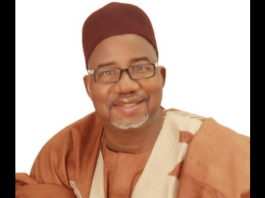
Following the killing of residents in Angwan Rukuba, Jos North, the National Chairman of the All Progressives Congress, Professor Nentawe Yilwatda, is calling for a decisive break from routine responses to violence. According to him, sympathy is not enough, strategy must follow.
During President Bola Ahmed Tinubu’s visit to Plateau State, a visit described as a moment of empathy and national solidarity, Yilwatda acknowledged the symbolism. However, he pushed the conversation beyond presence to action.
He described the killings as “inhuman, cowardly, and reprehensible,” but more importantly, he warned against normalising cycles of outrage that do not translate into results.
For many communities in Plateau, the issue is no longer whether violence will happen, but when. And that predictability is what Yilwatda argues must be disrupted.
He pointed directly to a hard truth that is often avoided. The perpetrators are not invisible. They operate within or around affected communities, taking advantage of weak coordination, silence, and delayed response systems.
That insight shifts responsibility beyond security agencies alone.
According to him, communities must become active participants in prevention, not just victims of attacks. Vigilance, early reporting, and local intelligence gathering are no longer optional. They are part of the solution.
At the same time, he challenged security agencies to rethink how they operate.
Outdated tactics, he argued, cannot confront modern threats. Criminal networks are evolving. Response systems must evolve faster.
He called for the adoption of intelligence-led security models powered by surveillance technology, drones, AI-driven monitoring systems, and real-time data integration. The goal is to detect threats before they become attacks.
This is where the conversation moves from emotion to economics.
Plateau is not just a conflict zone. It is one of Nigeria’s most naturally endowed states, with strong potential in tourism, agriculture, and culture. However, persistent insecurity continues to erode that potential.
“No economy can thrive where fear reigns,” Yilwatda noted, warning that continued violence could paralyse long-term development and limit opportunities for young people in the state.
That statement reframes the issue.
Security is no longer just about protection. Economic survival and future growth are now included in the equation.
The proposed solution, therefore, is broader than enforcement. It is structural.
Yilwatda called for a whole-of-society approach that brings together traditional rulers, religious leaders, political actors, youth groups, and security institutions to build a coordinated response system rooted in trust and accountability.
Meanwhile, President Tinubu’s visit to affected families added a human dimension to the moment. It signalled federal recognition of the crisis and a commitment to sustained engagement with local stakeholders.
However, the expectation is no longer symbolic presence. It is measurable progress.
The larger question now is whether this moment becomes another entry in a long list of national tragedies or the point where strategy finally meets urgency.
For Plateau, the stakes are no longer abstract. They are human, economic, and immediate.
And as Yilwatda put it, the line has been drawn clearly.
Plateau must not continue like this.