
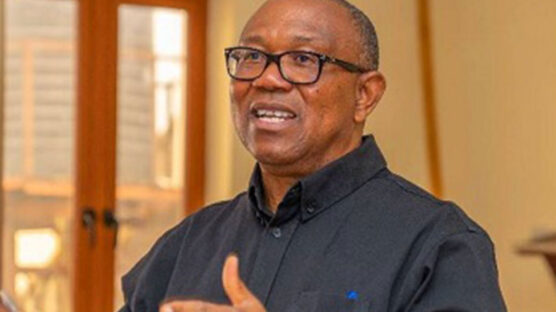
Former Anambra State governor and presidential candidate, Peter Obi, has criticized Nigeria’s power sector, describing the country’s electricity generation capacity as inadequate despite decades of development.
Speaking during a recent engagement, Obi reflected on Nigeria’s early progress in power generation, noting that as far back as the 1960s, the country was already capable of producing over 1,000 megawatts of electricity following investments such as the Kainji Dam project. He expressed concern that nearly 60 years later, Nigeria still struggles to generate up to 4,000 megawatts consistently.
He contrasted Nigeria’s situation with that of Egypt, highlighting the North African country’s significant strides in electricity generation.
According to him, Egypt currently generates tens of thousands of megawatts and has made rapid progress in expanding its capacity within a relatively short period.
Obi attributed the disparity to differences in human capital development, emphasizing that Egypt’s power sector is largely driven by locally trained engineers and professionals. He noted that during his visits to power plants and government ministries in Egypt, he observed that most personnel were educated within the country’s own university system.
He contrasted Nigeria’s situation with that of Egypt, highlighting the North African country’s significant strides in electricity generation.
According to him, Egypt currently generates tens of thousands of megawatts and has made rapid progress in expanding its capacity within a relatively short period.
Obi attributed the disparity to differences in human capital development, emphasizing that Egypt’s power sector is largely driven by locally trained engineers and professionals. He noted that during his visits to power plants and government ministries in Egypt, he observed that most personnel were educated within the country’s own university system.
He argued that Nigeria’s challenges are closely tied to insufficient investment in education and human development. According to him, a lack of skilled manpower has contributed to limited productivity and stagnation across key sectors.
The former governor concluded by stressing the need for deliberate investment in education and capacity building, stating that sustainable development can only be achieved when a nation prioritizes the growth and training of its people.
His words in part …
“1964, September, when Tafawa Belewa wrote the World Bank to borrow $82 million to build the kainji Dam. So you were able to generate over 1,000 megawatts of electricity in the 60s. Yet almost 60 years after, you cannot generate 4,000. It’s unacceptable. I just went to Egypt. They’re doing 58,000 and they are 100 million people. And they only added 30,000 Watts in the last 5 years.
All the people I met at the power plants were engineers, trained in Egyptian universities. When I went to the ministry, it was the same thing; they were all educated in Egypt.
So you need to invest in your people in education. I’ve visited all the states in Nigeria, and there is no production, and it’s because you have not invested in the people.”