

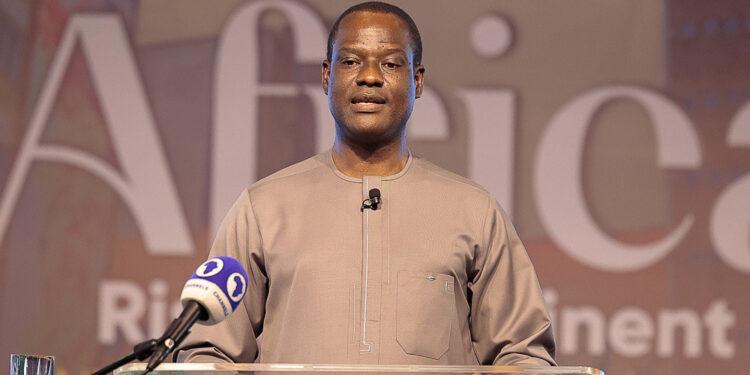
Oyedele made this appeal on Thursday during a panel session at the 24th Annual Conference of Women in Management, Business and Public Service (WIMBIZ), themed “The New Tax Law and You.”
He explained that the ongoing fiscal reforms, initiated under President Bola Tinubu’s administration, were designed to “reward compliance” and create a business environment that encourages growth before taxation.
“We began the reform by examining how people do business, how those businesses grow, and how they are financed,” Oyedele said.
“You can’t simply knock on the door and say, ‘Tax me.’ We first need to build businesses that can sustain corporate taxes. That’s why the reforms are people-centric.”
He revealed that under the new tax framework, companies with annual turnovers of ₦100 million or less will pay zero per cent corporate tax, while the Corporate Affairs Commission (CAC) will register 250,000 small businesses free of charge to encourage formalisation.
The tax reform, he added, also seeks to ensure fairness in value-added tax (VAT) administration, with critical sectors such as food, education, health, and pharmaceuticals to be fully exempted from VAT starting January 1, 2026.
“From next year, this bottle of water will be zero-rated for VAT,” he explained. “The same will apply to food, education, and medical services, because these are essential to everyday living.”
Citing government data, Oyedele noted that nearly 80 per cent of low-income households spend their income on five essential needs—food, education, health, rent, and transportation—hence the decision to remove taxes from those sectors.
To protect taxpayers from harassment and arbitrary actions by revenue officials, Oyedele announced the establishment of an Office of the Tax Ombudsman, which will safeguard citizens’ rights and address grievances.
“If any tax officer tries to harass or shut down your business, you can contact the Tax Ombudsman. They are legally empowered to protect you and enforce your rights,” he said.
He further urged organisations like WIMBIZ to train representatives who can escalate such cases to the Ombudsman, ensuring accountability and accessibility.
Oyedele also disclosed plans to issue exemption stickers to informal traders, such as street vendors, carpenters, and vulcanisers, to protect them from undue taxation.
“People who roast corn by the roadside or repair tyres shouldn’t be taxed. We’re introducing exemption stickers so they can go about their work without interference,” he stated.
Reaffirming the administration’s commitment to equitable reform, Oyedele stressed that the goal was to empower citizens rather than impose new burdens.
“We must stop taxing poverty, capital, and investment,” he declared. “As the President said, we will no longer tax the seed; we’ll wait, invest with you, and tax the fruits.”
The 24th Annual WIMBIZ Conference was held under the theme “Own Your Story, Walk in Power and Nurture the Future.”