
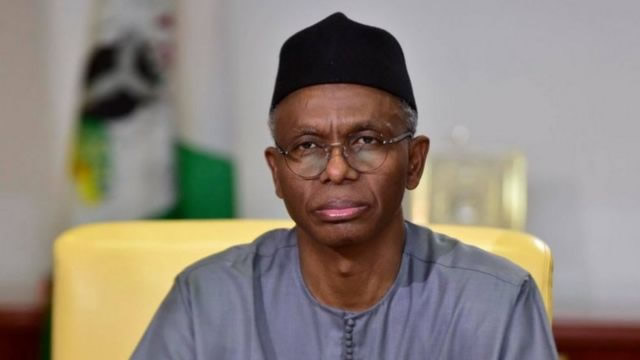
Former Kaduna State Governor Nasir El-Rufai has asserted that widespread frustration with the two major parties—the ruling All Progressives Congress (APC) and the opposition Peoples Democratic Party (PDP)—has created a significant political opening for the African Democratic Congress (ADC) ahead of the 2027 general elections.
Speaking in Jos on Wednesday during the unveiling of the ADC National Contact and Mobilisation Office, El-Rufai observed a pervasive mood of discontent among the populace. He noted that Nigerians across all regions and age groups have become deeply dissatisfied with the leadership styles, governance failures, and unfulfilled promises of the two dominant political forces.
According to him, this national disenchantment is compelling citizens to actively seek a credible alternative that can offer renewed hope, foster unity, and restore accountability to governance.
El-Rufai argued that the ADC is rapidly emerging as the necessary platform reflecting this “hunger for change,” observing a trend where, even as politicians continue to defect between the APC and the PDP, “ordinary Nigerians are turning instead to the ADC.”
He insisted that the 2027 elections will mark a fundamental shift in public sentiment, describing the contest as one “between the entrenched political elite and millions of Nigerians longing for a new direction.”
Highlighting the ADC’s unique appeal, El-Rufai stressed that the party’s structure is inherently inclusive, reserving 40 percent of leadership positions for young people and 35 percent for women. He said this structural commitment is what sets the Party apart, as it offers “genuine representation instead of recycling the same political actors who have dominated national leadership for decades.”
Reflecting on Plateau State’s recent history, El-Rufai expressed regret over the deterioration of peace and stability in the region, which was once known as a vibrant tourism hub. However, he maintained that renewed leadership, grounded in competence, sincerity, and unity, could successfully rebuild the State and restore its identity as the “Home of Peace.”
He called on Plateau residents to align with the ADC, stressing that the Party “has the capacity to unite people across ethnic and religious divides.”
He concluded that, with the right leadership, “Plateau and Nigeria at large can overcome past setbacks and chart a more inclusive future.”
Also speaking at the event, Plateau State ADC Contact and Mobilisation Coordinator, Jamilu Datti, underscored the impact of poor governance on Nigerian youth. Citing unemployment, insecurity, and inadequate education and healthcare services, Datti said, “Nigerian youths are paying the highest price for poor governance.”
He urged young people to recognize the ADC “as a platform that genuinely prioritises their welfare and participation.”