
A political standoff emerged between the executive and legislative arms of government yesterday, as the Senate protested the “selective implementation” of President Bola Tinubu’s directive to withdraw police orderlies from Very Important Persons (VIPs), even as the President ordered total, uncompromising compliance.
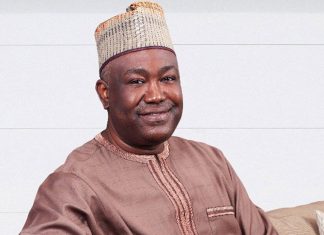
The Senate’s complaint came to a head following a motion raised by Senator Abdul Ningi (PDP, Bauchi Central) through a point of order, who informed the chamber that his only police orderly was withdrawn in the early hours of the preceding day.
Ningi demanded that enforcement be carried out across the board in the spirit of fairness and equity, stating: “It should be done across the board. Let’s see what happens from the office of the President, to the Vice President, to the Senate President, to the Speaker of the House, to the ministers.”
He alleged that the enforcement was clearly uneven: “I saw two convoys of ministers and they were carrying lots of security personnel. Mr. President, I have also seen business concerns, Chinese and other business concerns with their complements of orderlies. Mr. President, I have also seen daughters and sons of political office-holders having orderlies and having security covers.”
He stressed the indignity felt by lawmakers being targeted first: “I saw singers having orderlies and complementary protection. I cannot ever imagine that a senator of the Federal Republic of Nigeria, who has been here for a very long time will have his only one orderly withdrawn.”
While affirming he could protect himself, Ningi insisted on equitable treatment: “I can take care of myself but let it be done across the board. Let me not see governors, ministers, and business tycoons, being escorted by security personnel.”
Ningi concluded by demanding that the National Assembly should not be used as an example: “This matter should be addressed with all seriousness it deserved. I, therefore, call on the President of the Senate to ask the Chairman of Committee on Police Affairs to investigate why the directive is seemingly being implemented selectively. The National Assembly should not be used as a scapegoat.”
In response, the Deputy President of the Senate, Barau Jibrin, who presided over the session, informed the senators that the leadership was actively lobbying the Presidency for an exemption.
Jibrin said: “I want to assure you that the issue raised to protect you is taken seriously, and that at the leadership side yesterday (Tuesday), we agreed that the course of action should be undertaken in order to restore your police orderly to you, because it’s in line with international practice.” He expressed confidence in a positive outcome: “I’m sure we have a listening President. He will listen to us, and by the grace of God, he will save us from that order, which was given in good faith.”
The senators’ complaints coincided with President Tinubu’s firm restatement of his initial directive during the Federal Executive Council (FEC) meeting at the Presidential Villa. The President ordered total compliance with the withdrawal of police from VIPs, stressing the critical need to deploy personnel to areas grappling with kidnapping and terrorism.
Tinubu affirmed his commitment to the order, stating that anyone requiring police services must obtain his explicit clearance via the Inspector-General of Police (IGP): “I told the IGP and I hope the Minister of Police Affairs is here, if you have any problem of security because of the nature of assignment, please contact the IGP and get my clearance.”
He directed agencies to coordinate replacement personnel swiftly: “The Minister of Interior should liaise with IGP and Civil Defence structure to replace those police officers who are on special security duties, so that you don’t leave people exposed.”
The President insisted on immediate enforcement: “It should be effected. We face challenges of kidnapping and terrorism; we need all the forces we can utilise.” He added that provision would be made for those genuinely exposed: “I know some of our people are exposed and I understand that we have to make exceptional provision for them and the Civil Defence are equally armed and I want NSA to ensure our forest guards are armed too, so take it very seriously.”
During the meeting, President Tinubu also directed Vice President Kashim Shettima to liaise with state governments through the National Economic Council (NEC) on rehabilitating grazing reserves into ranches and livestock settlements, emphasizing the need to eliminate conflicts and turn livestock reform into economically viable development.