


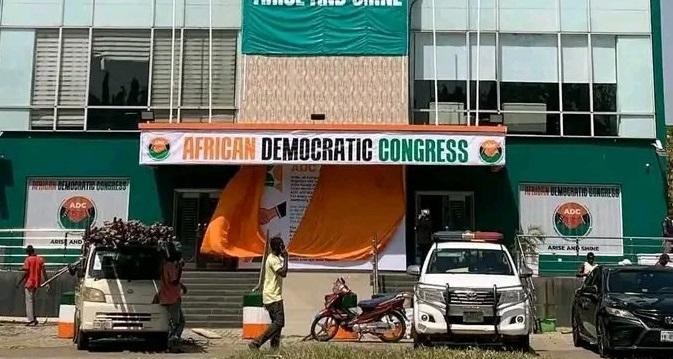
The African Democratic Congress (ADC) has urged the Federal Government to publish the full text of the recently signed Nigeria–United States health cooperation agreement, insisting that Nigerians deserve transparency on its actual terms.
In a statement issued Sunday, ADC National Publicity Secretary Bolaji Abdullahi said the party supports foreign aid and bilateral cooperation to strengthen Nigeria’s healthcare system, but warned against provisions that could undermine constitutional guarantees of inclusion and equality.
The party highlighted discrepancies between Abuja’s account of the $5.1bn Memorandum of Understanding and Washington’s framing of the deal. While Nigerian officials describe the MoU as a technical framework to expand primary healthcare and boost domestic financing, U.S. statements emphasize support for Christian faith-based providers, with $200m earmarked for 900 clinics and hospitals.
“Nigerians are entitled to know which version of the agreement reflects the actual terms signed, and why such differences exist between Abuja’s account and Washington’s,” the ADC declared. “This divergence is not merely a communications issue; it appears calculated to avoid public scrutiny, raising fundamental questions about transparency, constitutional compliance, and Nigeria’s sovereignty.”
The party cited Section 42(1) of the Constitution, which prohibits discrimination based on religion, origin, or political opinion, and Sections 15 and 17, which mandate national integration and equality of opportunity. It also questioned why Nigeria is expected to commit nearly $3bn in domestic financing while the U.S. provides $2bn in grants, yet key decisions appear to rest outside Nigeria’s control.
Healthcare, the ADC stressed, must remain neutral, inclusive, and universally accessible. Injecting identity-based conditions into health financing risks politicizing care delivery and eroding public trust. The party therefore called on the Federal Government to clarify whether the religious and security-linked elements referenced by the U.S. are part of the agreement Nigeria actually signed, and to explain how the deal aligns with constitutional principles and safeguards Nigeria’s sovereignty.



















 has urged the Federal Government to publish the full text of the recently signed)