
Nigeria’s digital space is moving fast, faster than the rules that are meant to guide it. But two government agencies are now trying to close that gap by working together instead of in silos.
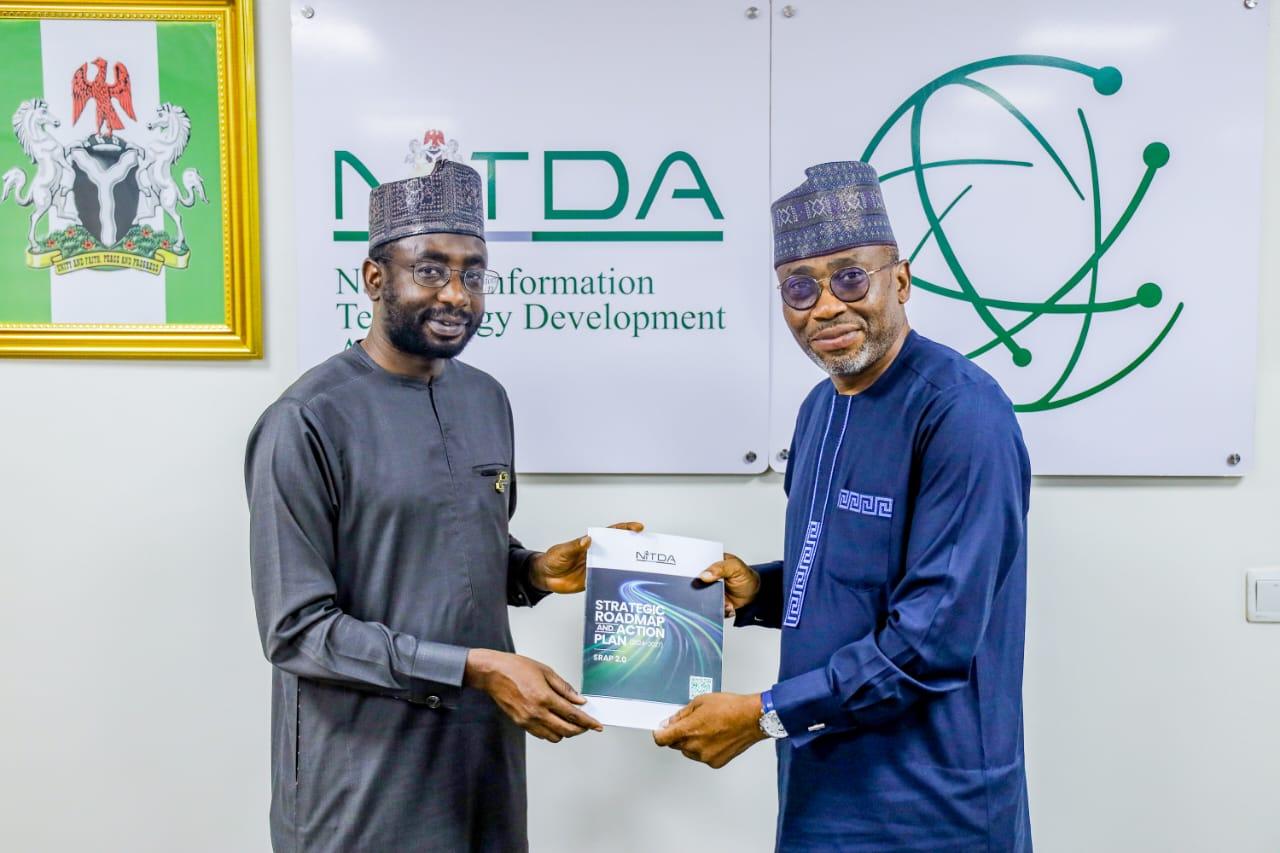
The Director General of the National Information Technology Development Agency, Kashifu Inuwa, recently hosted the Director General of the National Broadcasting Commission, Charles Ebuebu, on a courtesy visit.
The focus was simple and timely: how technology is reshaping media, and why regulation has to catch up without slowing innovation down.
Both leaders agreed on one thing early in the conversation. Digital transformation and regulation can no longer happen in separate rooms.
In today’s Nigeria, they affect each other too directly to be treated as different conversations.
Speaking during the meeting, Inuwa explained that digital transformation is not a project with an end date.
Organisations do not “complete” it and move on. It is continuous work that requires learning, unlearning, and adjusting to new realities as they appear.
He shared how NITDA’s own transformation started from the inside. When the agency began its reform journey, most of its staff came from the traditional civil service system.
That meant deeply rooted processes, long approval chains, and a culture shaped by routine rather than innovation.
According to him, changing systems was impossible without first changing how people think.
More than 70 percent of NITDA’s staff, he noted, came from the mainstream public service. Understanding that reality pushed the agency to focus on people first.
Mindsets had to be reset, skills had to be built, and a culture that rewards accountability and innovation had to be deliberately created.
From that experience, NITDA rebuilt its transformation strategy around three core areas: people, processes, and technology.
Inuwa stressed that technology on its own does not deliver results. Without skilled people and clear processes, even the best tools fail.
Culture played a central role in this shift. The agency carried out cultural audits and introduced changes designed to make staff feel safe enough to speak up, share ideas, and question outdated ways of working.
The goal was to remove fear from collaboration and make it easier for ideas to flow across departments and levels.
For Inuwa, culture is not a side conversation. It determines whether any strategy actually works. A good plan means little if the environment does not support execution.
He also explained that NITDA adopted a broader framework that looks at people, processes, culture, content, and technology together.
Through this approach, the agency addressed long-standing issues such as command-and-control leadership, excessive reliance on top-level approvals, and fear of taking initiative.
One clear result was process reform. NITDA documented over 396 internal processes and redesigned many of them to cut out delays and unnecessary sign-offs.
Responsibilities that once had to pass through the Director General’s office were reassigned to departments, allowing teams to take ownership of their work and freeing leadership to focus on strategy.
With clearer processes in place, automation became easier and more effective. Digital tools were introduced where they actually solved problems, not just because they were trendy.
On capacity building, Inuwa revealed that all NITDA staff underwent mandatory training in artificial intelligence. The aim was not to replace people with machines, but to help staff work smarter and reduce dependence on manual tasks.
Today, teams across the agency use AI to improve workflows, support decision-making, and manage systems more efficiently.
He was clear that NITDA does not adopt technology for show. Every tool must serve a real need and align with clear organisational goals.
As part of its learning process, the agency has developed a digital transformation playbook that documents what worked, what failed, and what they learned along the way. Inuwa said NITDA is willing to share this playbook with NBC and other public institutions.
To strengthen collaboration, he proposed practical areas of partnership. These include sharing the transformation playbook, designing tailored training programmes, enrolling NBC staff in digital literacy initiatives developed with global partners like Cisco, and offering technical support to help modernise regulatory frameworks in line with current digital and media realities.
Earlier, NBC Director General Charles Ebuebu welcomed the initiative and described collaboration between both agencies as long overdue.
With media and technology increasingly intertwined, he said informal conversations were no longer enough.
Ebuebu noted that a structured partnership between NBC and NITDA is critical for effective regulation of Nigeria’s evolving media landscape.
He added that such cooperation would support content creation and distribution, strengthen local media, encourage knowledge sharing, and help protect Nigeria’s cultural and national interests.
As Nigeria’s digital ecosystem continues to grow, both agencies are aligned on a simple truth. Real progress happens when technology, people, and policy move forward together.