

On a campus known for shaping some of Nigeria’s sharpest minds, a new building has quietly entered the story of Obafemi Awolowo University, Ile Ife, with a clear purpose.
It is not a lecture hall, not a hostel, and not a monument built for spectacle. Instead, it is a space designed to slow students down, ask better questions of their future, and remind them that ambition grows best when it is rooted in patience, discipline, and faith.
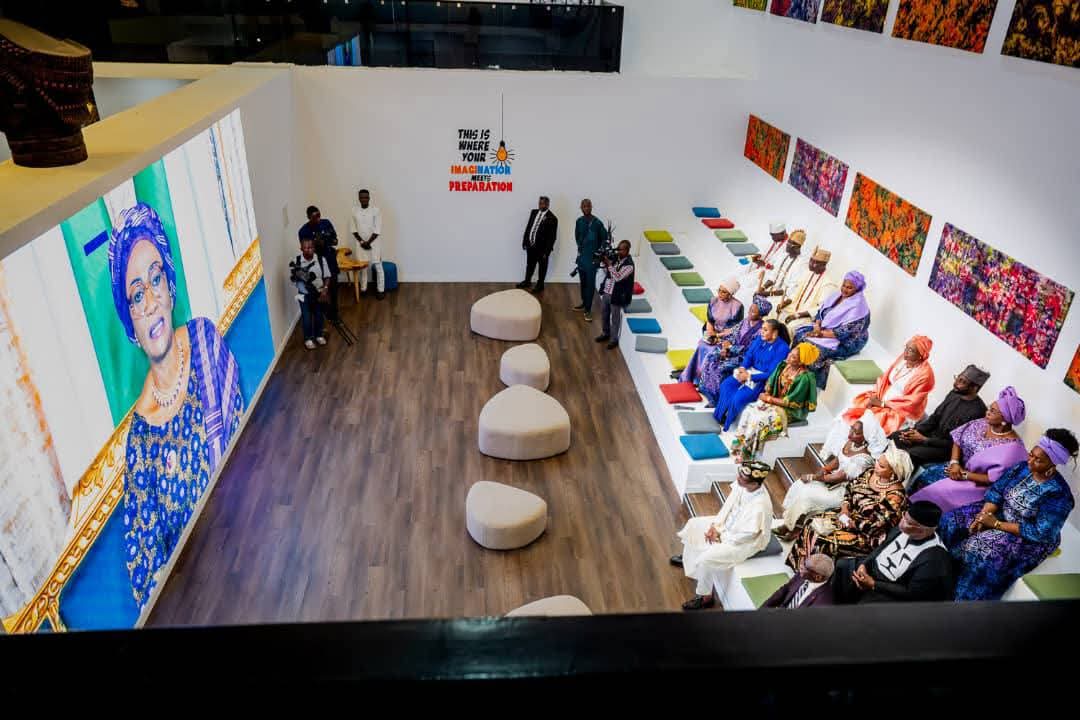
On Thursday, the Wife of the President, Senator Oluremi Tinubu, commissioned the Senator Oluremi Tinubu Dream Centre at Obafemi Awolowo University, Ile Ife, a facility designed not for lectures or ceremonies, but for reflection, mentorship, and long-term thinking.

For many students, this could change things for better. In a country where young people are under constant pressure to succeed quickly, the Dream Centre introduces a counter-narrative: that purpose grows through patience, discipline, and clarity.
Speaking at the commissioning, Senator Remi said the centre was created to remind students to stay rooted in their own journeys rather than measure success by comparison.

“This centre was established to remind students not to covet the dreams of others, but to walk patiently with their own,” she said. “The journey to achievement requires discipline, consistency, and faith.”

She emphasised that the Dream Centre was built for both boys and girls, reflecting her belief that every young person deserves equal encouragement to aspire and grow.
The facility also houses inspirational materials, including her four-part book; The Journey of Grace, which documents how faith and service shaped her life and leadership.

However, the Dream Centre did not emerge overnight. In his remarks, the Ooni of Ife, Oba Enitan Adeyeye Ogunwusi, traced the project back to 2019, when he first proposed honouring Senator Tinubu within the university.
“At the time, the university senate was hesitant, as such recognition was traditionally reserved for founding fathers,” the monarch explained.
After extended deliberations, approval was eventually granted for a three-kilometre road to be named Senator Oluremi Tinubu Way, a breakthrough that laid the groundwork for the Dream Centre.
According to the Ooni, the project suffered delays during the COVID-19 pandemic but gained renewed momentum after Senator Tinubu became First Lady, a development he described as providential.
“Despite resistance and delays, this centre symbolises perseverance, recognition, and our collective commitment to supporting young Nigerians,” he said, stressing that the facility was built for all students, not girls alone.
From a development and innovation standpoint, the Director General of the National Information Technology Development Agency, Kashifu Inuwa, described the Dream Centre as a practical response to the need for values-driven leadership.
“This is a space where storytelling, learning, and reflection come together,” Inuwa said. “It allows young people to engage with real-life narratives that reinforce resilience, leadership, and vision.”
Similarly, the Vice Chancellor of OAU, Professor Adebayo Simeon Bamire, described the commissioning as a milestone for the institution.
According to him, the centre complements academic life by offering students a space to reflect, reset, and draw inspiration beyond the classroom.
“This centre is part of broader interventions that support both academic and community life on campus,” he said, adding that it aligns with the university’s mission to nurture leaders and innovators who can shape the nation.
Notably, the Dream Centre reflects collaboration in action. While the Ooni of Ife conceptualised and donated the building, NITDA provided the IT-enabled devices, underscoring the shared responsibility required to invest meaningfully in young people.
Ultimately, the Oluremi Tinubu Dream Centre stands as a strategic reminder that national development does not begin with infrastructure alone.
It begins when institutions intentionally invest in the mindset, values, and aspirations of the next generation.
In that sense, the centre is not just a building on campus, but a long-term statement about the kind of future Nigeria hopes to build.