

In any democracy, representation is only as credible as the data that proves it. When records are fragmented or manually processed, oversight weakens. When data is structured, analysed and transparently managed, public confidence grows.
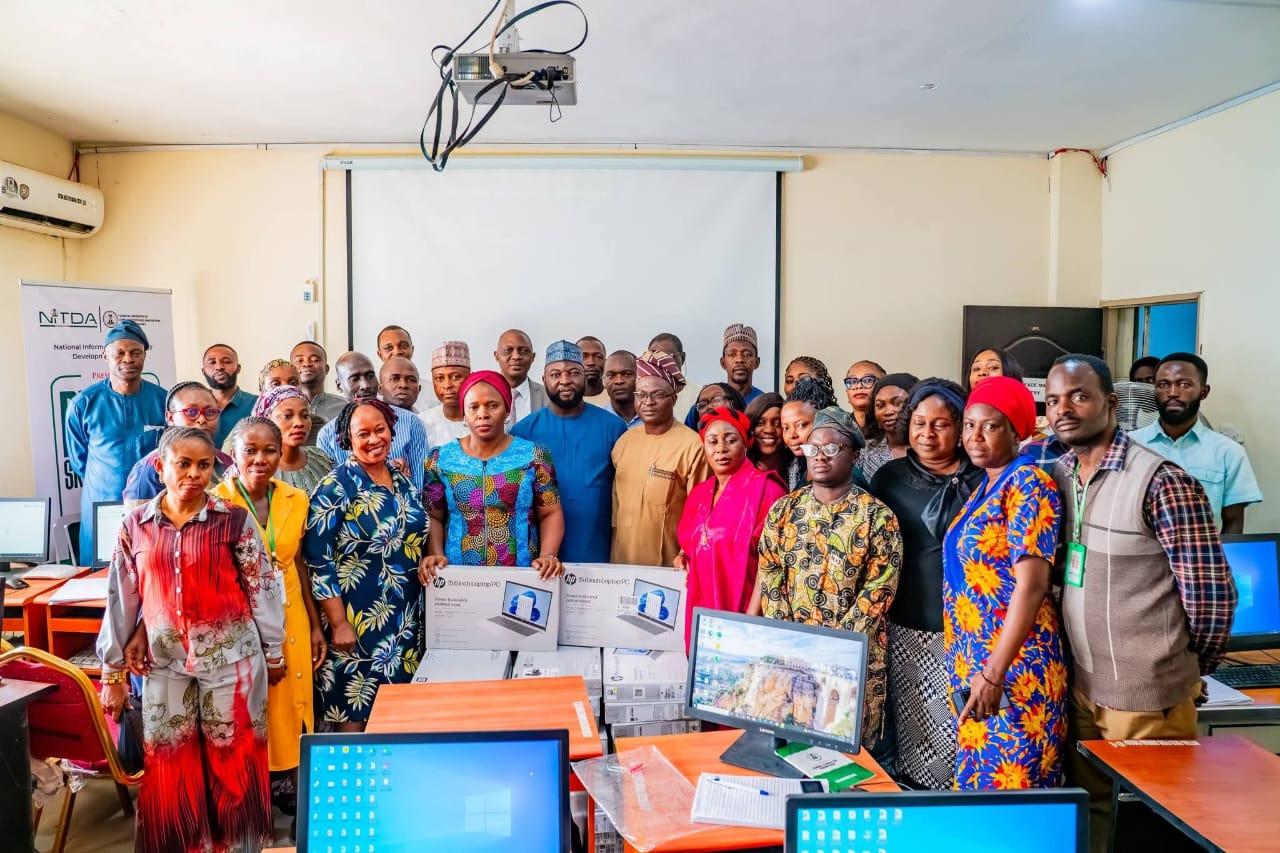
It is within this context that the National Information Technology Development Agency has concluded a targeted digital capacity-building programme for the Federal Character Commission, equipping the institution with 35 laptops and specialised training designed to transition it from manual processes to a data-driven oversight model.
The intervention forms part of NITDA’s Digital Literacy for All programme, which is structured to strengthen digital competence across public institutions and align governance systems with Nigeria’s broader economic reform priorities under Bola Ahmed Tinubu.
While economic reform often focuses on fiscal policy and investment inflows, institutional efficiency remains a decisive factor in sustaining inclusive growth.
The Federal Character Commission occupies a sensitive position within Nigeria’s governance architecture. Constitutionally mandated to monitor equitable representation across Ministries, Departments and Agencies, the Commission depends heavily on accurate and well-managed national datasets. Without reliable data systems, compliance monitoring becomes reactive rather than strategic.
Representing NITDA’s Director General, Kashifu Inuwa, the Acting Director of Digital Literacy and Capacity Building, Dr Ahmed Yusuf Tambour, explained the objective behind the initiative.
“We are here at the Federal Character Commission to carry out a training for staff of the Commission in the area of digital literacy to enhance their proficiency,” he said.
Importantly, the programme was not generic. It was tailored to the Commission’s statutory mandate. “We are particularly focusing on data analysis and data management, because this really aligns with the core mandate of the Commission,” Tambour added.
The training, conducted at the Commission’s headquarters, concentrated on practical competencies in data analysis, structured data management and digital workflow integration.
These capabilities directly influence how nationwide staffing data is collected, validated and interpreted. As a result, the Commission is better positioned to track representation patterns across MDAs with improved speed, accuracy and transparency.
Inuwa described the engagement as productive and outcome-focused. “We’ve trained 35 participants here, and the training has been very well received,” he noted. He further expressed optimism about institutional impact, stating, “We are hoping that this will help the Commission to manage the very, very important data that they collect across all MDAs.”
Equally significant is the hardware support that accompanied the training. The donation of 35 laptops ensures that newly acquired skills can be embedded into daily operations rather than remain theoretical.
In public sector reform, sustainability often hinges on whether tools match ambition. By pairing digital skills with functional infrastructure, NITDA has strengthened the Commission’s operational capacity in tangible terms.
Moreover, the shift toward structured data management enhances the Commission’s ability to produce credible compliance reports and provide evidence-based recommendations to government.
In a country where representation and equity are foundational principles, the integrity of oversight mechanisms shapes public trust.
Therefore, this intervention represents more than an institutional workshop. It reflects a strategic recalibration of how governance functions in a digital age.
By equipping the Federal Character Commission with the skills and tools required for data-driven oversight, NITDA is reinforcing the infrastructure of accountability that underpins effective public service delivery.
As Nigeria advances its digital transformation agenda, reforms of this nature demonstrate that modern governance is not only about policy announcements but also about building the systems that make fairness measurable and enforceable.