
Nigeria’s digital economy is expanding fast, yet one critical sector still struggles with a shortage of skilled cybersecurity professionals.
At the same time, women remain underrepresented in a field that increasingly shapes national security, financial systems and public trust in technology.
To close that gap, the National Information Technology Development Agency has launched a focused initiative to train Nigerian women in cybersecurity skills and expand their participation in the country’s digital defence workforce.
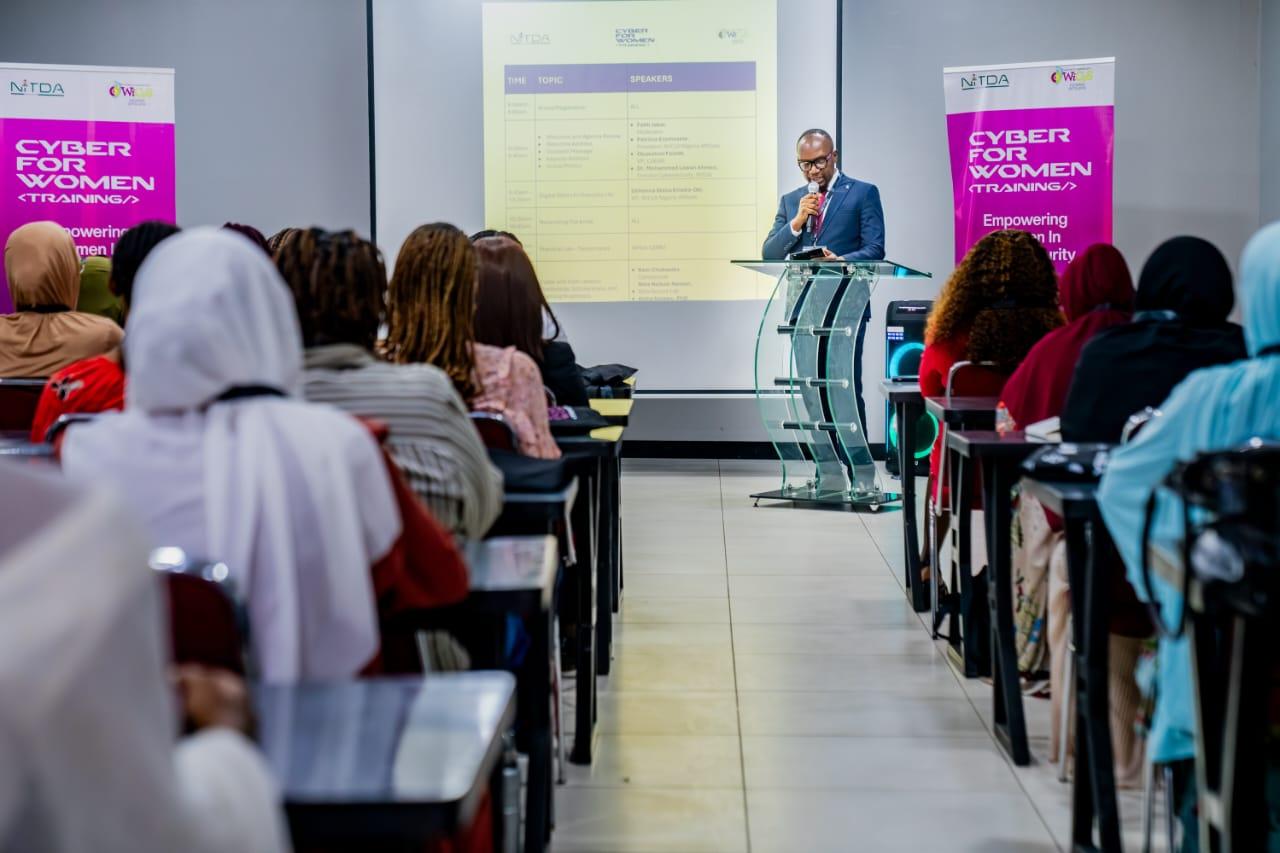
The programme, known as *Cyber for Women*, was organised by NITDA in collaboration with Women in Cybersecurity and held in Abuja on March 10, 2026.
The training brought together aspiring professionals, technology practitioners and industry mentors with a shared goal of strengthening Nigeria’s cybersecurity capacity by investing in women.
Speaking at the event, NITDA’s Director of Cybersecurity, Mohammed Lawan Ahmed, represented by Ayodele Bakare, described the initiative as more than a technical workshop.
According to him, it is a strategic intervention designed to position Nigerian women as active contributors to the country’s digital security ecosystem.
“Today’s programme is not just another training but a strategic investment in the future of Nigeria’s digital security landscape and the world at large, and this time women are intentionally positioned at the centre of the approach,” he said.
The urgency behind the programme is clear. As digital services expand across banking, telecommunications, public administration and e commerce, cyber threats are growing in scale and complexity.
Consequently, demand for cybersecurity professionals has surged worldwide. Yet women continue to represent only a small percentage of the global cybersecurity workforce.
For NITDA, addressing that imbalance is both a workforce strategy and an inclusion priority.
Ahmed emphasised that Nigeria cannot afford to leave half of its talent pool outside one of the most critical sectors of the digital economy.
“Today is a declaration that the women of Nigeria are not bystanders in the digital revolution; they are its architects,” he said.
The training therefore focused on equipping participants with practical knowledge, industry tools and collaborative networks that support long term career development.
In addition to technical exposure, the programme created a space where participants could interact with cybersecurity professionals and explore pathways into the field.
“Our objective is clear. We want to empower Nigerian women in cybersecurity with knowledge, tools and collaboration opportunities,” Ahmed added.
Importantly, the initiative forms part of NITDA’s broader capacity building strategy. As Nigeria strengthens its digital infrastructure and online services, cybersecurity readiness has become central to economic stability and public confidence in technology systems.
Participants were encouraged to see themselves not only as trainees but as future defenders of the nation’s digital ecosystem.

Their engagement, organisers said, reflects growing awareness among Nigerian women of the opportunities and responsibilities within the cybersecurity profession.
“Your presence here today signifies commitment and readiness for the ever evolving digital age and its cybersecurity risks,” Ahmed told the participants.
By investing in targeted training programmes such as Cyber for Women, NITDA aims to build a stronger local talent pipeline, expand digital inclusion and ensure that Nigeria’s cybersecurity workforce reflects the diversity of the society it protects.
As digital systems continue to shape daily life, initiatives like this signal a broader shift. Cybersecurity is no longer a niche technical discipline. It is a national priority, and increasingly, Nigerian women are stepping forward to lead within it.