
Nigeria’s next economic growth story may not come from oil, agriculture or manufacturing alone. Increasingly, it is being built in studios, on laptops and across digital platforms where creators are turning culture into global value.
That shift is now receiving stronger policy backing from the National Information Technology Development Agency, which has reaffirmed its commitment to building a technology powered ecosystem for Nigeria’s creative economy.
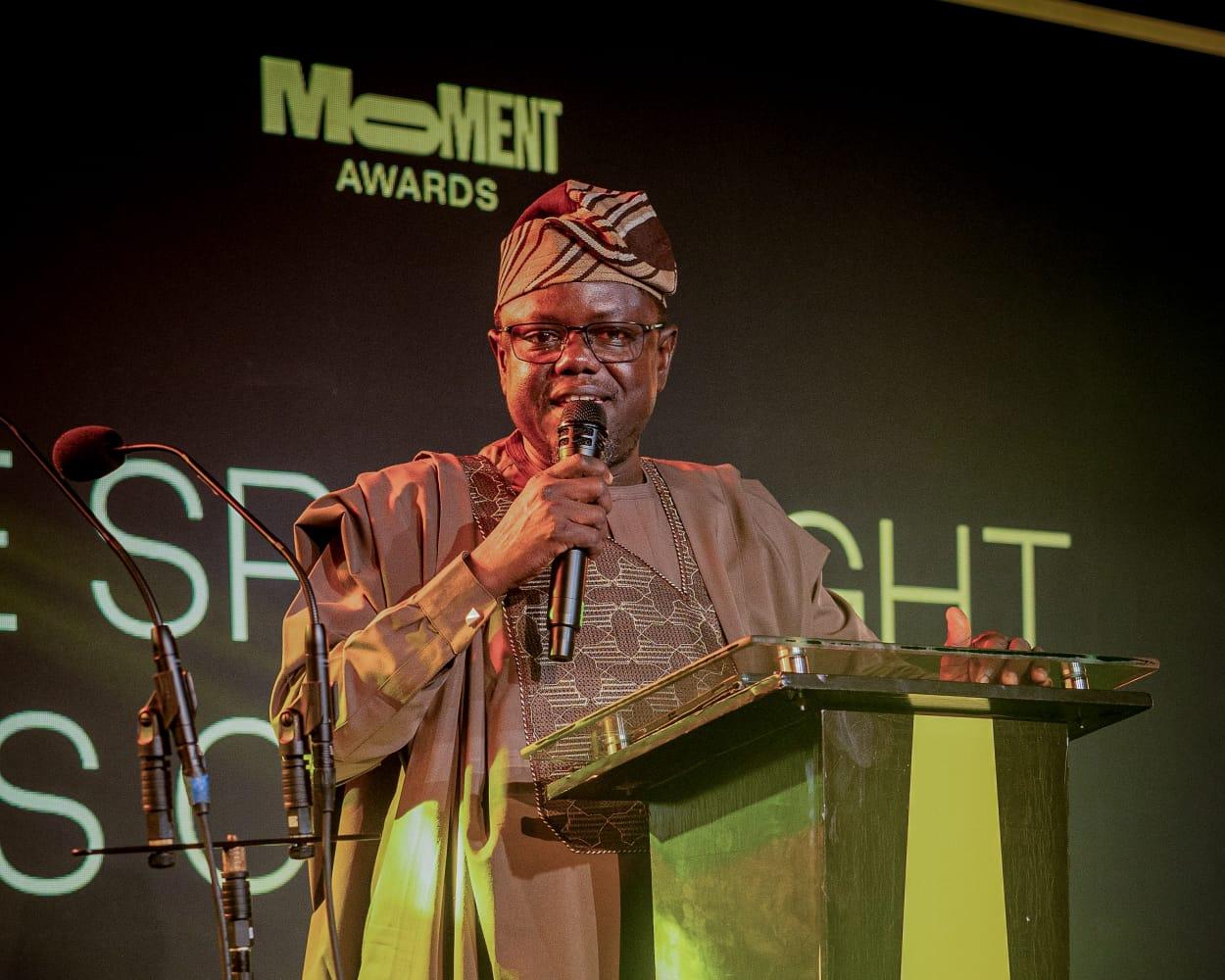
Speaking at Moment 2026, a major gathering of creators and industry players, NITDA’s Director General Kashifu Inuwa outlined a strategy that connects digital skills, infrastructure and regulation to unlock the full economic potential of the sector.
He noted that Nigeria’s creative industry, already valued at over 9 billion dollars, could exceed 13 billion dollars in the coming years if supported with the right systems.
“Nigeria has always been a nation of storytellers, musicians, filmmakers, designers and innovators. What is remarkable today is that this creativity has evolved beyond cultural expression to become a powerful economic force,” he said.
However, the opportunity is not just about talent. It is about structure. According to Inuwa, the future of the creative industry sits at the intersection of creativity and technology, where access to tools, platforms and data determines how far a creator can go.
“Today, creativity is powered by connectivity, computing power, digital platforms and data. A smartphone, a laptop and access to the internet can enable a young Nigerian to reach millions of people around the world,” he added.
To support that reality, NITDA is investing in digital talent development. Through initiatives such as the 3 Million Technical Talent programme, young Nigerians are being trained in animation, visual effects, game development and digital media. The goal is to prepare a workforce that can compete in a global creator economy where skills are increasingly digital and demand is borderless.
At the same time, infrastructure is being positioned as a critical enabler. The Agency highlighted ongoing efforts to develop local computing capacity through the National Sovereign Cloud Initiative, as well as expand internet access through broadband programmes such as Project BRIDGE.
Together, these investments are designed to reduce barriers and allow creators to produce, distribute and monetise their work at scale.
Importantly, regulation is also part of the strategy. As more creators operate online, issues around data protection, cybersecurity and intellectual property become more urgent.
NITDA says it is strengthening frameworks that protect digital assets while building trust in Nigeria’s online ecosystem.
The Agency is also looking ahead. Through the National Centre for Artificial Intelligence and Robotics, it is supporting research and capacity building in artificial intelligence, giving creators access to tools that are already reshaping global content production.
For policymakers, the message is clear. Creativity is no longer just cultural expression. It is economic infrastructure.
“Your creativity is not just entertainment. It is innovation, intellectual property, economic opportunity and national influence,” Inuwa said, urging creators to recognise the scale of what they are building.
As Nigeria pushes to diversify its economy, the creative sector is emerging as a serious contender. With the right mix of skills, infrastructure and policy, what started as cultural output is increasingly becoming a structured engine for jobs, exports and global relevance.