
Nigeria’s digital economy conversation has moved past ambition. The real question now is execution, and according to the National Information Technology Development Agency, execution will depend on one thing many policies still struggle with. Alignment.
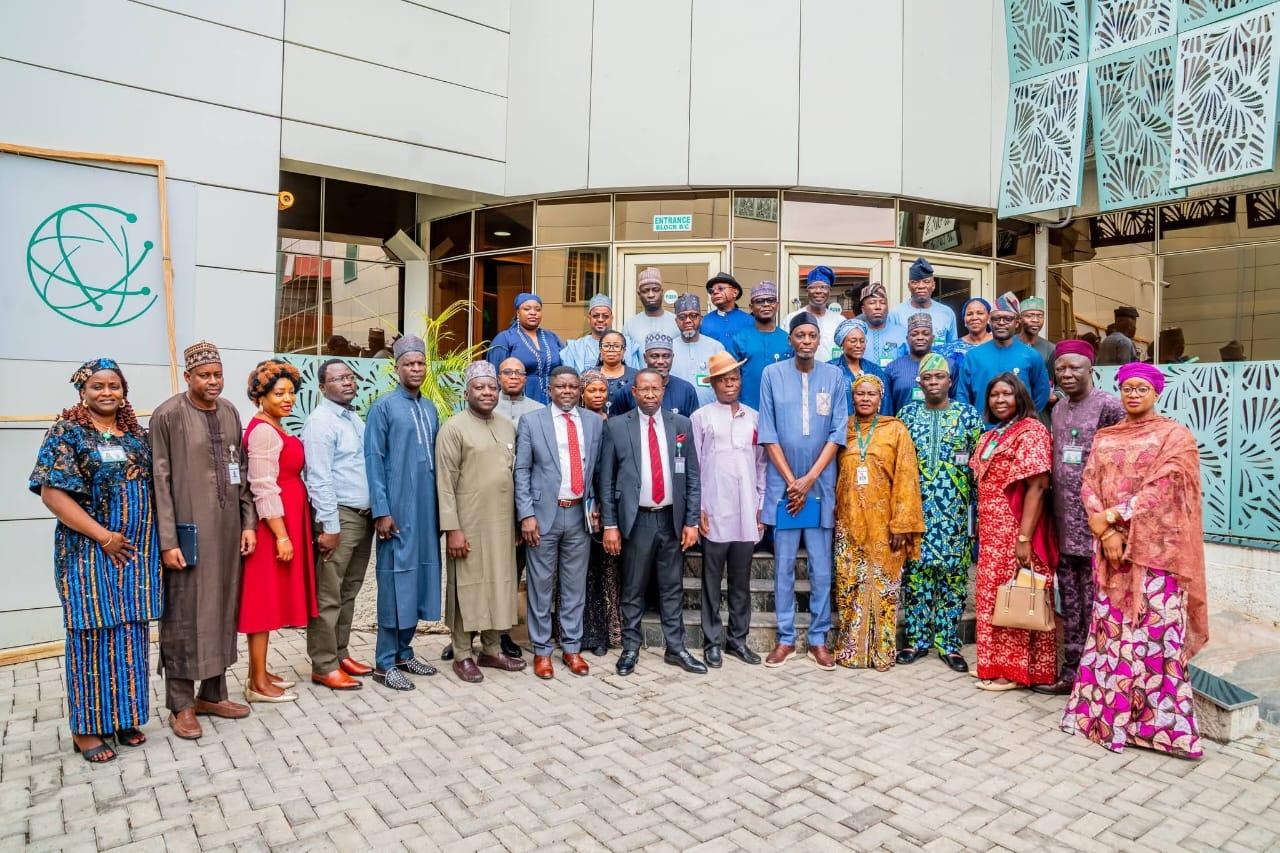
At a NITDA-States IT Stakeholders’ Engagement in Abuja, Director General Kashifu Inuwa made a pointed case for deeper collaboration across government, private sector, academia and civil society.
The message was simple, but it carries weight at this stage of Nigeria’s digital journey. No single institution can build a functioning digital economy on its own.
“Nigeria’s economy is at a critical juncture that requires urgent diversification,” he said, positioning digitalisation as a practical pathway to job creation, growth and long term stability.
That framing reflects where the country currently stands. As Africa’s largest economy, Nigeria faces increasing pressure to reduce dependence on traditional revenue streams and build sectors that can scale globally.
The technology ecosystem, already one of the fastest growing segments of the economy, is now being treated as central to that transition.
However, the gap between potential and reality remains wide.
According to Inuwa, digitalisation offers access to knowledge, markets and innovation at a scale that was not previously possible for developing economies.
Yet those opportunities only translate into impact when systems are connected and stakeholders move in the same direction.
That is where collaboration becomes more than a talking point.
NITDA’s current strategy, anchored on its Strategic Roadmap and Action Plan 2.0, is built around creating an enabling environment rather than controlling innovation.
The agency has established over 100 IT centres across the country and continues to expand access to digital skills through the National Digital Literacy Framework. These interventions are designed to prepare Nigerians to participate in a technology driven economy.
Still, infrastructure alone does not solve the problem.
Inuwa stressed that innovation ecosystems thrive when policies are clear, funding is accessible and institutions are aligned. Without that, even the most promising ideas struggle to move from concept to market.
“Stronger partnerships are required among all stakeholders to ensure that innovation translates into real economic value,” he noted.
That includes deliberate investment in innovation hubs and incubators that can support startups from early stage development to global competitiveness.
Through initiatives such as the Office for Nigerian Digital Innovation and the National Centre for Artificial Intelligence and Robotics, NITDA is attempting to build that pipeline.
The results are beginning to show. Nigeria’s innovation ecosystem has produced globally recognised startups and attracted international investment. Yet sustaining that momentum will require consistent coordination, not isolated success stories.
From a state perspective, the message is already influencing local strategies. Officials from Kogi State, speaking at the event, highlighted ongoing efforts to apply digital solutions in sectors such as healthcare, while also expanding partnerships with international organisations to strengthen their innovation ecosystem.
That alignment between federal vision and state level execution is exactly what NITDA is pushing for.
Nigeria does not lack ideas, talent or ambition. What it needs is a system where those elements connect, scale and deliver measurable outcomes.
The direction is becoming clearer. The digital economy will not be built by standalone programmes or policy announcements.
It will be built by collaboration that is structured, sustained and intentional enough to turn opportunity into impact.