

Pope Leo XIV is set to visit a prison widely criticised for harsh and unsanitary conditions in Equatorial Guinea on Wednesday, marking one of the most symbolic moments of his nearly concluded tour of Africa.
The visit, scheduled for Bata prison in the country’s economic hub, Bata, comes as the second-to-last engagement of an 11-day journey that has seen the pontiff speak boldly on global inequality, governance, and human rights.
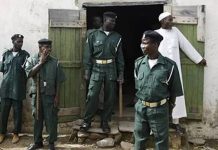
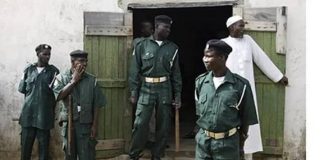
Having arrived in Equatorial Guinea on Tuesday after earlier stops in Algeria, Cameroon, and Angola, the pope is expected to meet directly with inmates at the prison facility, which has drawn criticism from rights groups over overcrowding, poor sanitation, and alleged abuse.
In addition to the prison visit, Pope Leo XIV will engage with families and young people at a local stadium in Bata, and honour victims of a tragic 2021 explosion caused by a fire at a munitions depot that claimed over 100 lives and injured hundreds more.
Beyond Bata, the pope’s itinerary includes a visit to Mongomo, where he is scheduled to celebrate Mass and tour a school, further deepening his outreach to local communities.
Earlier, during his arrival, the pontiff delivered a pointed message to the country’s leadership, urging the nation to place itself “in the service of law and justice” — a statement seen as significant in a country often criticised for governance and human rights concerns.
Despite the firm message, his tone was relatively restrained compared to previous stops on the tour, where he openly condemned global injustice, denounced “tyrants” and “exploitation,” and even clashed with Donald Trump over differing views on international conflicts.
At 70, the pope has had to navigate a delicate diplomatic path in Equatorial Guinea, balancing his pastoral mission with the political sensitivities surrounding the long-standing rule of Teodoro Obiang Nguema Mbasogo, who has governed the country since 1979.
Roughly 80 percent of the country’s population of about two million identifies as Catholic, reflecting its colonial history under Spain. Yet, despite significant oil wealth—accounting for nearly half of the economy and over 90 percent of exports—economic inequality remains stark.
According to human rights observers, much of the country’s oil revenue benefits a small elite, while a large segment of the population continues to live in poverty.
During an official event attended by the president and his son, Teodoro Nguema Obiang Mangue, the pope highlighted the widening economic divide, describing it as “dramatically” growing — a subtle but clear critique of the nation’s socio-economic realities.
Teodorin, as the vice president is popularly known, has faced international scrutiny, including a 2019 conviction in France for financial crimes, and is often associated with displays of opulence in contrast to the living conditions of ordinary citizens.
Pope Leo XIV is expected to conclude his African tour on Thursday with a large open-air Mass in the capital, Malabo, before returning to Rome, bringing to a close an extensive 18,000-kilometre journey across the continent.