The federal government has unveiled a string of major achievements and fresh initiatives in the transportation sector, including the expansion of the national rail network, development of a Smart National Transport Data Bank, standardised bus terminals and plans for high-speed rail connectivity across the country.
Permanent secretary, Federal Ministry of Transportation, Engr. Olufunso Adebiyi, disclosed this on Monday at the opening of the 19th National Council on Transportation, where he presented what he described as a “summary of summaries” of the administration’s interventions in the sector.
Speaking on the theme of the council, “Developing an Effective Transport System for Nigeria: The Role of Integrated Transportation,” Adebiyi said the federal government was deliberately moving away from Nigeria’s excessive dependence on road transportation by strengthening rail, water and air transport infrastructure.
He said transportation remained central to Nigeria’s economic development, noting that movement of people, goods and services was essential to trade, employment, productivity and national growth.
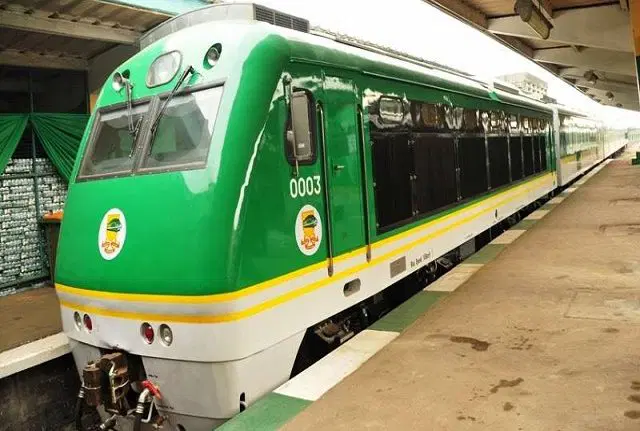
Adebiyi described the ongoing development of Nigeria’s railway system as a “rebirth” of rail transportation, recalling the period when the Nigerian Railway Corporation was one of the country’s most respected institutions.
He listed several completed and operational rail corridors, including Port Harcourt–Aba, Warri–Itakpe, Lagos–Ibadan and Abuja–Kaduna, while disclosing that work was progressing on additional routes.
According to him, the Kaduna–Zaria–Kano corridor is nearing completion and is expected to become operational by December, while the Kaduna–Daura–Katsina axis is also advancing towards completion.
He added that the Katsina–Jibia–Maradi connection was expected to be ready by the following year, while work was also progressing on the Kano–Dutse corridor.
In his address delivered by Dr. Ishaku Musa, the head of the Civil Service of the Federation, Abel Enitan said Nigeria needed to complement infrastructure development with strong institutions, effective regulation, reliable data, innovation and a skilled workforce.
Enitan described transportation as the “lifeblood of the modern economy,” saying an efficient transport system would improve access to markets, support trade and investment, reduce logistics costs and enhance the competitiveness of Nigerian businesses.