
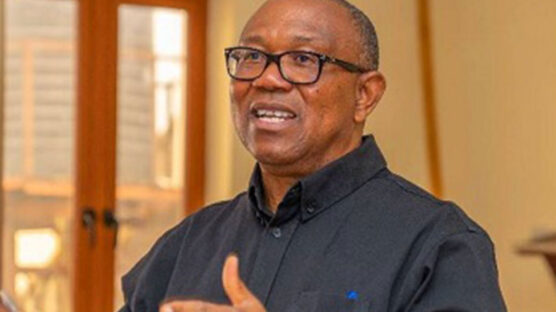
Former Anambra State Governor and 2023 presidential candidate, Peter Obi, has issued a scathing critique of the current management of Nigerian highways, warning that poorly positioned security checkpoints have become a “failure of governance” that actively endangers the lives of travelers.
In a detailed statement released on Sunday, January 11, 2026, Obi revealed that his observations were drawn from firsthand experiences traveling across several major road networks during the recent festive season. He described a scene of nationwide chaos, where extreme gridlock disrupted the plans of thousands of citizens.
Obi pushed back against potential critics who might view traffic complaints as a minor issue, emphasizing that the efficiency of a nation’s transport system is a direct reflection of its leadership.
“Some may dismiss certain areas of my commentary as trivial, but every detail has profound implications for our society; they significantly affect people’s daily lives,” Obi stated.
He painted a vivid picture of the frustration faced by commuters, noting: “At times, the gridlock was so extreme that travellers bound for distant destinations were forced to abandon their journeys, wasting hours trying to escape the chaos. A closer inspection reveals that the primary contributor to this congestion is the ill-placed security checkpoints.”
While the former governor acknowledged the necessity of security operations, he labeled the practice of mounting checkpoints at narrow bottlenecks or within active construction zones as “irresponsible.” He argued that these static points of delay are causing a ripple effect of physical and security risks.
“These unnecessary delays leave drivers exhausted, raising the risk of accidents as they struggle to stay alert behind the wheel,” he observed.
Obi further explained that by stalling traffic for hours, security agencies are inadvertently pushing travelers into the “danger zone” of nighttime driving—a period when highway robberies and kidnappings are most prevalent.
“Extended delays force those who set out early to find themselves on the road well after dark, increasing their vulnerability amid rising insecurity. The purpose of security is to protect lives, not endanger them,” he added.
To resolve the crisis, Obi urged security high commands to adopt a more sophisticated, technology-driven, and coordinated approach to highway monitoring. His recommendations include oving checkpoints away from narrow roads and construction sites, implementing “expedited inspections” during peak travel hours to keep traffic moving and enhancing inter-agency cooperation to prevent multiple, redundant stops on a single stretch of road.
Concluding his appeal for a more empathetic approach to public service, Obi remarked: “Such measures would make Nigeria’s roads safer and more humane for all.”