
Nigeria’s ambition to lead in artificial intelligence and smart agriculture is gaining institutional backing as the National Information Technology Development Agency and Wigwe University open detailed talks on a strategic partnership that could reshape research, digital skills and innovation across sectors.
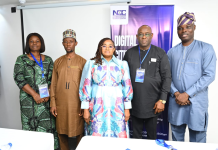
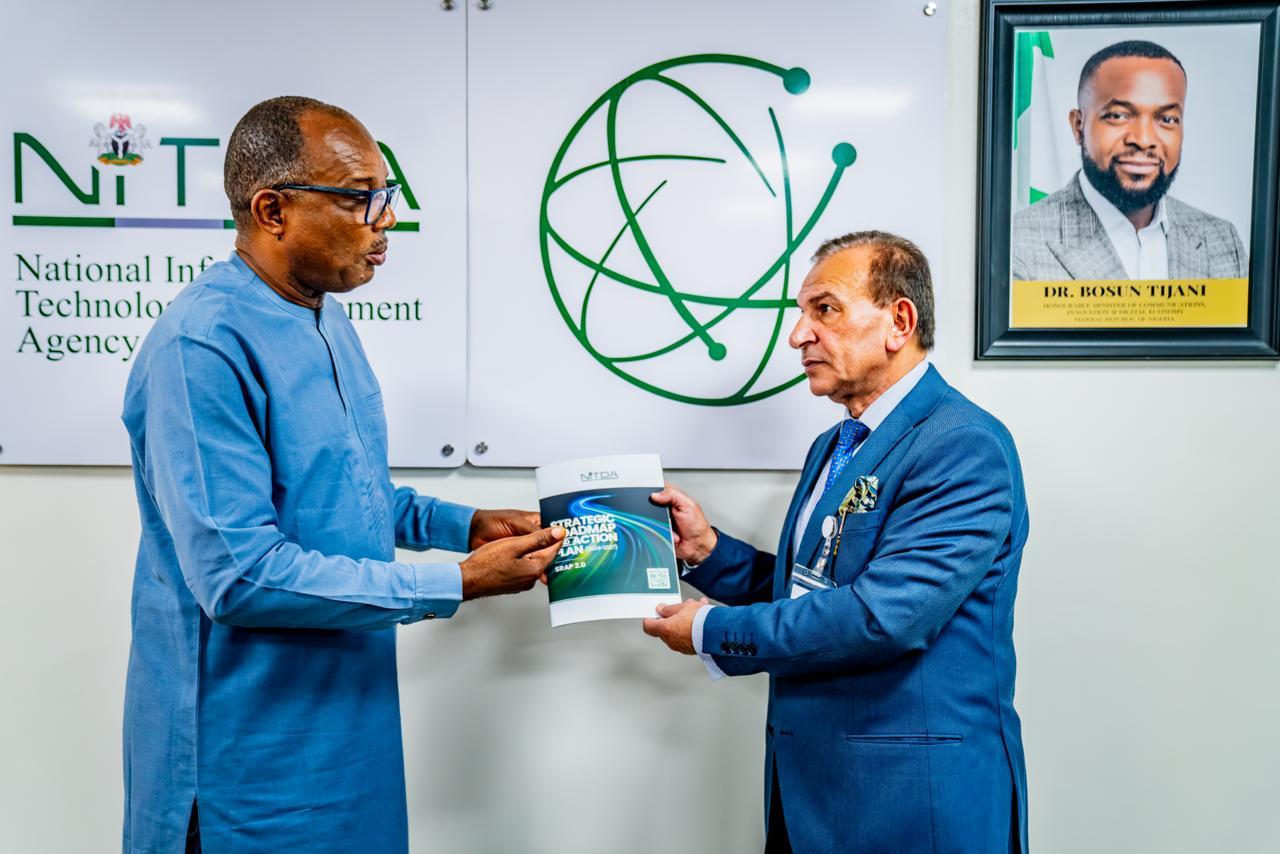
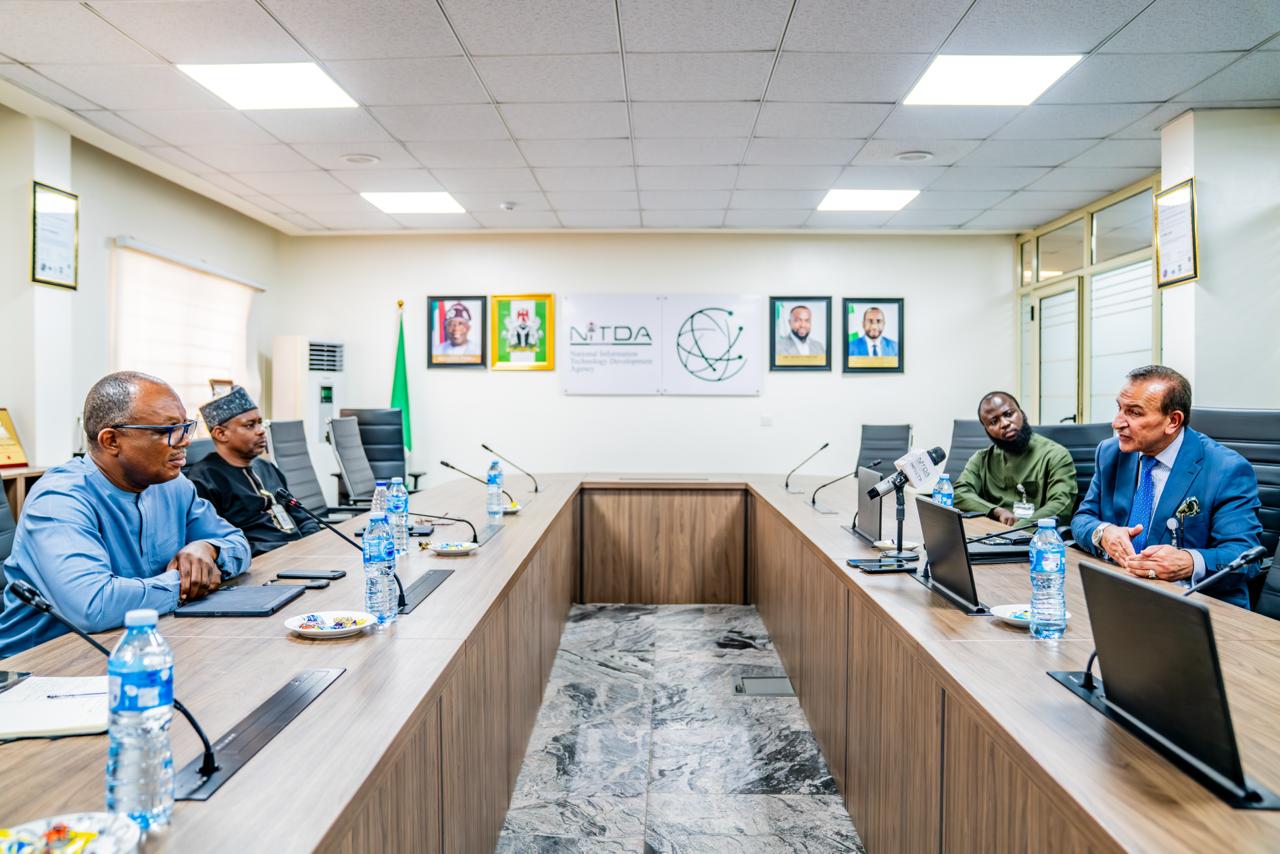
At a high level meeting in Abuja, Wigwe University Vice Chancellor Professor Marwan Al Akaidi met with senior officials of NITDA to explore collaboration spanning AI research, agriculture technology, virtual learning and digital talent development.
Beyond courtesy, the engagement revealed strong alignment between national policy direction and the university’s emerging research agenda.
Professor Al Akaidi, who leads the young institution founded on the vision of the late Herbert Wigwe, described the university’s mission as building a centre of excellence that can compete globally while solving local problems.
He noted that Nigeria’s challenge is not a lack of talent but a lack of structured platforms that connect talent to research, industry and national priorities.
He revealed that Wigwe University is already conducting AI for Health research in Nigeria with a team of ten researchers and is working toward establishing a full scale AI centre.
According to him, the long term goal is not dependency on imported systems but the creation of what he called a distinctly Nigerian AI engine, designed around local languages, data realities and sector needs.
“We do not want to be passive users of foreign AI tools,” he said. “We want to build systems that reflect Nigeria’s context and can compete globally.”
Importantly, the university’s location in Rivers State positions it at the centre of agricultural communities. Professor Al Akaidi pointed to the potential of AI enabled livestock management, precision farming, food processing optimisation and yield prediction. Using Nigeria’s cattle population as an example, he argued that technology driven feeding systems and data based decision making could dramatically increase output and efficiency.
“In countries with fewer cattle, productivity is far higher because of technology and structured systems,” he explained. “If we apply AI properly, Nigeria’s agricultural wealth can multiply.”
On the government side, NITDA officials signalled readiness to move from concept to execution. Representing the Agency, Dr Aristotle described NITDA as Nigeria’s technology development and regulatory hub, with mandates covering innovation, standards, research and ecosystem growth. He highlighted the National Centre for Artificial Intelligence and Robotics and the National Adaptive Village for Smart Agriculture as immediate touchpoints for collaboration.
He affirmed that partnership remains central to NITDA’s strategy. “No single institution has all the answers,” he said. “Whatever we commit to, we will do, because implementation is what creates impact.”
Further reinforcing this direction, NITDA’s Director of Research and Development, Dr Kumo, stated that the Agency is working to elevate Nigeria into the top 25 per cent of global research performance.
He noted that Wigwe University’s interests in AI, robotics, unmanned aerial vehicles, blockchain, the Internet of Things and additive manufacturing align closely with NITDA’s research priorities.
In addition, discussions extended to virtualising education to expand national access. By leveraging digital platforms, Wigwe University’s programmes could reach learners beyond its physical campus, supporting inclusion and workforce readiness.
From a capacity building perspective, NITDA’s Digital Literacy and Capacity Building Department stressed that foundational digital fluency remains a national gap.
Many workers still lack the competencies required to operate modern digital systems effectively. As a result, universities must not only teach theory but graduate students who are digitally capable and industry ready.
Professor Al Akaidi echoed this concern, emphasising continuous curriculum review in computing and engineering disciplines to prevent outdated learning. He argued that strong industry links are essential to ensure graduates can lead in emerging technologies rather than follow global trends.
At Wigwe University, he said, this philosophy is already visible, with second year students preparing to launch a major educational application, a signal of the institution’s push toward entrepreneurship and product creation.
“We need to work together,” he concluded. “If we combine our strengths, we can produce something real for Nigeria and beyond.”
The meeting closed with agreement to establish dedicated contact teams and structured workstreams covering AI research, agricultural innovation, digital literacy, curriculum development and emerging technologies.
For Nigeria, the significance is clear. Artificial intelligence and smart agriculture are no longer abstract policy ambitions. Through coordinated action between regulators and academia, they are moving toward practical frameworks that can drive productivity, research credibility and globally competitive digital talent.