
The Director-General of the National Information Technology Development Agency (NITDA), Kashifu Inuwa, has urged government institutions and organisations to adopt Artificial Intelligence (AI) responsibly by prioritising human accountability, policy regulation, and digital skills development.
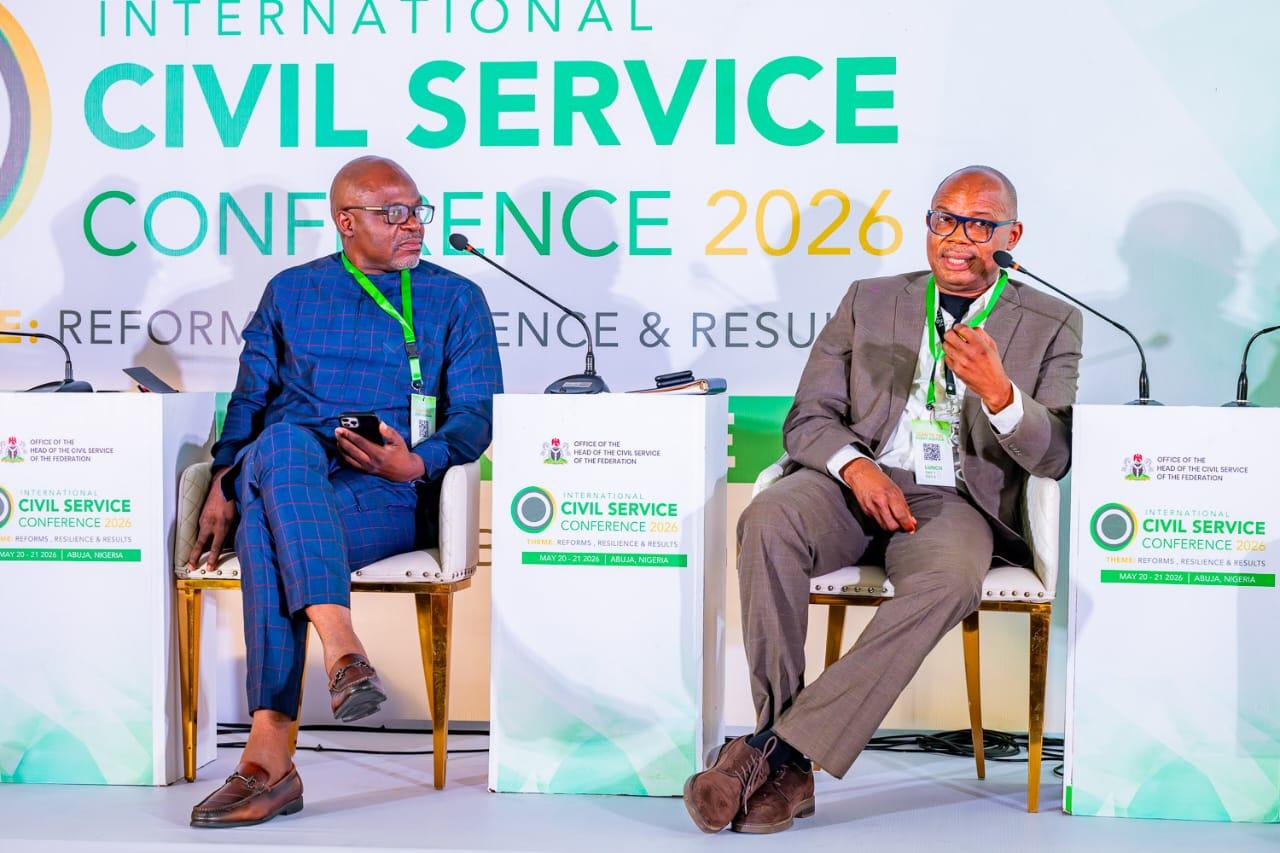
Speaking at the International Civil Service Conference 2026 held at Eagle Square, Inuwa, represented by NITDA’s Director of Stakeholder Management and Partnership, Aristotle Onumo, disclosed that the Agency has commenced implementation of a comprehensive AI Transformation Plan aimed at repositioning the organisation for improved efficiency, institutional continuity, and productivity.
According to him, the three-year transformation initiative is designed to establish a digitally driven institution capable of sustaining seamless operations regardless of personnel changes.
“In NITDA, we have developed what we call the AI Transformation Plan — a three-year initiative that ensures continuity of operations even if there is a complete change in personnel. New staff members should be able to integrate seamlessly into the system and continue operations without disruption,” he said.
The NITDA boss explained that the Agency has already integrated AI into several internal processes, particularly document management and workflow administration. He revealed that official documents submitted at the Agency are now digitally scanned upon arrival and automatically routed to the appropriate officers through AI-powered systems that identify keywords and subject areas.
He further noted that the system tracks response timelines and flags delays when officials fail to process correspondence within stipulated periods.
“All that is required is for documents to be submitted at the gate. The AI system scans and routes them to the responsible officers, while also monitoring treatment timelines and escalating delays where necessary,” he explained.
Addressing growing concerns over job displacement caused by AI adoption, Inuwa stressed that the technology should be viewed as a productivity tool rather than a threat to human relevance in the workplace.
“There is widespread concern that AI will replace jobs, especially within the public service. However, individuals who are willing to upskill and adapt will continue to benefit from the opportunities AI provides,” he stated.
To support workforce transition, he disclosed that NITDA has launched agency-wide AI training programmes for staff members. Employees previously engaged in manual operations, he said, are now being redesignated into emerging AI-related roles.
“We have ensured that all staff undergo AI training. Personnel previously responsible for manual file operations are now serving as AI assistants and AI administrators. Our focus is on preparing the workforce for the future, not replacing it,” he added.
The NITDA DG also underscored the importance of maintaining human oversight and accountability in AI deployment, warning against overdependence on automated systems in governance processes.
“You must not eliminate human monitoring and accountability in AI implementation. At the end of the day, someone must remain responsible for decisions and outcomes,” he cautioned.
On regulation and governance, he called on Ministries, Departments, and Agencies (MDAs) to establish internal AI policies capable of defining clear operational boundaries for the technology.
According to him, AI deployment within government institutions differs significantly from private-sector usage because public institutions are directly accountable for ethical breaches, operational failures, and data misuse.
He stressed the need for strong governance frameworks to ensure responsible AI adoption, protect citizens’ rights, and guarantee compliance with data protection regulations.
“We must ensure that every AI deployment aligns with responsible use principles and data protection laws. Without proper governance frameworks, the risks of data misuse could become more severe,” he warned.
Inuwa further highlighted NITDA’s broader efforts to accelerate AI adoption nationwide following the development of Nigeria’s National AI Strategy, which he described as one of the country’s most forward-looking digital policy frameworks.
He added that the Agency is currently using its internal operations as an AI sandbox to test implementation models before expanding adoption across the wider public service ecosystem.
As part of efforts to strengthen digital capacity within government institutions, he disclosed that NITDA is collaborating with the Office of the Head of Civil Service of the Federation to equip civil servants with digital literacy and AI-related skills.
He concluded by reiterating the importance of continuous learning and adaptability in an increasingly AI-driven world.
“AI has not come to completely replace people. However, individuals who fail to develop relevant skills may struggle to remain competitive within the evolving technology ecosystem,” he said.