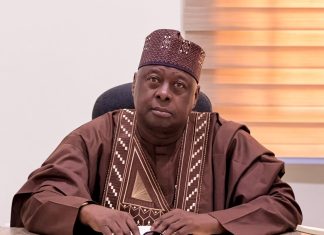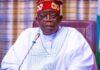

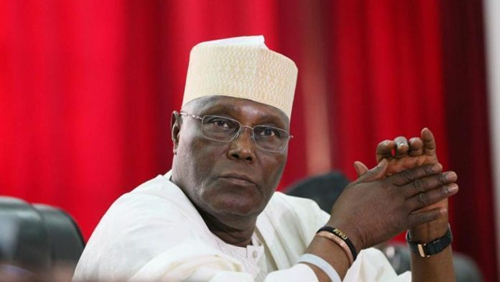
The Presidency on Thursday downplayed the emergence of former Vice President Atiku Abubakar as the presidential candidate of the African Democratic Congress (ADC) for the 2027 election, insisting that the opposition coalition behind him poses no serious threat to President Bola Tinubu’s re-election bid.
Presidential aides and leaders of the ruling All Progressives Congress described the opposition alliance as a gathering of disgruntled politicians united more by personal ambition and grievances than by ideology or national development plans.
Atiku had emerged winner of the ADC presidential primary held in Abuja after polling 1,846,370 votes to defeat former Minister of Transportation, Rotimi Amaechi, who secured 504,117 votes, and businessman Mohammed Hayatu-Deen, who polled 177,120 votes.
The primary, however, ended amid controversy after Amaechi and Hayatu-Deen rejected the process, alleging widespread irregularities during the nationwide exercise conducted across the 36 states and the Federal Capital Territory.
Both aspirants subsequently stayed away from the final collation and declaration ceremony.
But reacting to Atiku’s emergence, the Presidency maintained that the former Vice President’s candidacy represented nothing new in Nigeria’s political landscape and would not alter the political calculations ahead of the 2027 elections.
Senior Special Assistant to the President on Media and Publicity, Temitope Ajayi, said Atiku’s repeated presidential ambitions had become a familiar pattern in Nigerian politics over the last three decades.
“Atiku is welcomed. It is a familiar terrain for him. He is a perennial contestant in our presidential race. He has been chasing this presidential ambition since 1992.
“He has been a candidate in three elections of AC in 2007, PDP in 2019 and 2023, and he was an aspirant in 2015, 2011 and 1992. He has been an aspirant thrice and a candidate thrice based on available record.
“By way of that, we can say he is a veteran of the presidential contest. But he doesn’t pose any threat to President Tinubu’s election.”
The presidential aide argued that the coalition backing the ADC candidate lacked ideological direction and was instead driven by frustration among politicians who had lost influence within government circles.
According to him, the opposition alliance was formed around personal ambitions rather than national development objectives.
“They were banking on building a major platform around all the main opposition figures, especially those dissatisfied in PDP, and a few elements in the APC. So, they were hoping to build a coalition around aggrieved politicians, those who left government years ago and still want to remain at the heart of everything.
“Their coalition was not built around any higher purpose goal, any manifesto about national development, but around the egos of aggrieved individuals who feel they should be at the centre of every government.
“They are not contesting anything with Tinubu on ideas, or philosophy, or developmental vision. It’s about: ‘Oh, I was supposed to be a minister or ambassador but I couldn’t, then Tinubu must go,’” Ajayi said.
The Presidency also pointed to the withdrawal of key political figures from the coalition project as evidence that the alliance was already weakening internally.
Ajayi specifically referenced the absence of Labour Party figure Peter Obi and former Kano State governor Rabiu Kwankwaso from the ADC arrangement, arguing that the coalition lacked the unity that propelled the opposition victory in 2015.
He said, “Buhari won the election on a unified opposition platform where everybody subsumed their personal ambitions and structures and interests under the collective. But that is not happening here.
“He doesn’t even command the Buhari support base in the North that could have propelled him. Atiku and Buhari are not the same. There is no indices to compare them.”
The presidential spokesman also questioned the stability of the ADC following the fallout from the party’s primary election.
“With Obi and Kwankwaso gone, Amaechi is aggrieved because he said he rejected the result of the primaries that produced Atiku, who is remaining there? And Atiku is hoping to be a northern candidate. Nigerians are looking for a President of Nigeria, not a President of a region.”
Ajayi further took a swipe at Peter Obi, arguing that the former Anambra State governor lacked the political structure to survive a competitive party primary.
“That one (Obi) has never won a party (promary) but has always been coronated candidate or had the tickets donated to him. So, Obi cannot face an intra-party contest because he does not have the capacity to win a party primary.
“He ran for governor under PDP but couldn’t get the ticket and went to APGA, where APGA was handed to him based on Ojukwu’s popularity in Anambra State,” Ajayi said.
Meanwhile, Atiku has intensified efforts to stabilise the opposition coalition after the contentious primary by reaching out to Amaechi and Hayatu-Deen.
During his acceptance speech on Wednesday night, the former Vice President appealed for unity within the ADC and urged his co-contestants to join him in what he described as a mission to rescue Nigeria.
“In particular, I invite Chief Chibuike Rotimi Amaechi and Alhaji Mohammed Hayatu-Deen to join me in this fight to save our democracy and our country,” Atiku had said.
The latest political exchanges have further deepened conversations around the 2027 presidential race, particularly on issues of opposition unity, zoning and the continued relevance of long-standing political figures within Nigeria’s evolving electoral landscape.