

The National Information Technology Development Agency (NITDA) has unveiled a national framework aimed at establishing a comprehensive system for measuring the contribution of digital technologies to Nigeria’s economy, in a move designed to strengthen evidence based policymaking and accelerate the country’s digital transformation.
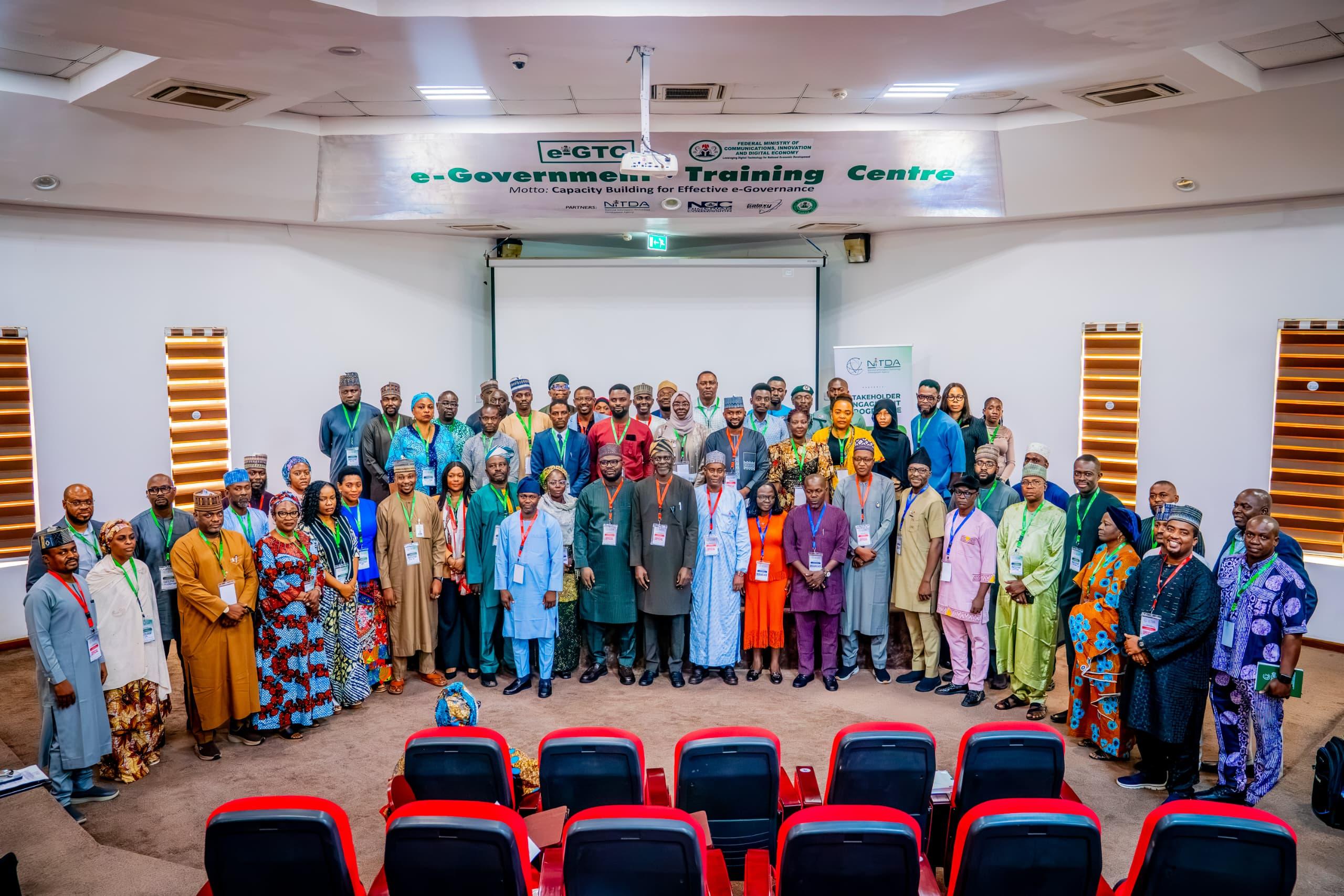
The initiative was unveiled during the **Stakeholder Engagement and Validation Workshop on the Indicators and Measurement Framework for the National Research Study on the Impact of Digital Technologies on Nigeria’s Economy: Key Growth Indicators, Gaps and Future Outlook held at the e-Government Training Centre of the Public Service Institute of Nigeria (PSIN) in Abuja.
The workshop brought together representatives of government agencies, regulatory institutions, academia, development partners, private sector organisations and researchers to validate the framework that will guide a nationwide assessment of the country’s digital economy.
Speaking at the opening ceremony, the Director General of NITDA, Kashifu Inuwa, CCIE, represented by the Director of the Special Duties Unit, Mr. Olawumi Oladejo
, said sustainable digital transformation depends not only on technology deployment but also on reliable data, sound evidence and institutional collaboration.
He noted that Nigeria has made significant progress in broadband expansion, digital payments, digital public services, innovation and entrepreneurship. However, he observed that the absence of a harmonised national measurement framework has made it difficult to accurately evaluate the impact of these investments, identify development gaps and effectively prioritise future interventions.
According to him, the National Research Study is designed to provide a credible evidence base for assessing how digital technologies contribute to economic growth, job creation, innovation, financial inclusion, improved public service delivery and national competitiveness.
The study will establish a common national framework for measuring digital transformation across sectors and institutions, providing policymakers with reliable data to support informed decision-making,” he said.
Inuwa added that the initiative aligns with NITDA’s Strategic Roadmap and Action Plan (SRAP 2.0), particularly its objective of strengthening Nigeria’s technology research ecosystem through data-driven policymaking. He urged stakeholders to contribute their expertise to ensure the framework reflects international best practices while addressing Nigeria’s unique developmental priorities.
Chairman of the Technical Steering Committee and Director of Research and Development at NITDA, **Dr. Saidu Mohammed Kumo**, said although Nigeria’s digital economy continues to expand rapidly, the country’s ability to systematically measure its impact on productivity, economic growth and social inclusion has not kept pace.
He disclosed that researchers drawn from Nigeria’s six geopolitical zones worked alongside the National Bureau of Statistics (NBS) to develop a statistically robust framework capable of generating credible national data.
According to Kumo, the framework focuses on three major analytical pillars: digital infrastructure and access, digital capabilities and skills, and digital adoption alongside the enabling environment.
These indicators will be assessed across five strategic sectors—financial services, government services, e-commerce and digital trade, telecommunications, and e-health.
He further revealed that the committee has developed 81 core indicators to evaluate the impact of digital technologies on businesses, public institutions and society. The validation workshop, he explained, provided stakeholders with the opportunity to review the proposed metrics, assess their relevance across sectors and identify any outstanding data gaps before the commencement of nationwide data collection.
Delivering a goodwill message on behalf of the Statistician-General of the Federation, **Mrs. Saadatu Hayatuddeen Auwal** of the National Bureau of Statistics described digital technology as a key driver of modern economic development, stressing that accurate measurement is essential for understanding its contribution to national growth.
She reaffirmed the NBS’ commitment to supporting the initiative through technical collaboration and the production of reliable, timely and policy-relevant statistics.
Representing the Federal Ministry of Health, **Mrs. Ezedozie Adaora Ifeyinwa** commended NITDA for identifying healthcare as one of the five pilot sectors for the study.
She highlighted the transformative role of electronic health records, telemedicine and data-driven disease surveillance in improving healthcare delivery, while emphasising the need for robust measurement systems to assess their impact on health outcomes and economic development.
Ifeyinwa also identified fragmented health data, varying levels of digital maturity among healthcare institutions and data privacy concerns as key challenges requiring collaborative solutions. She pledged the ministry’s continued support in strengthening data sharing and promoting a more integrated digital health ecosystem.
The workshop featured technical presentations on the draft Indicators and Measurement Framework covering the five pilot sectors—e-health, financial services, e-commerce and digital trade, telecommunications and government services. Participants reviewed the proposed indicators, examined sector-specific methodologies and offered recommendations to strengthen the framework ahead of the nationwide research exercise.
At the close of the workshop, stakeholders reaffirmed their commitment to supporting the development of an institutionalised national digital economy measurement system that will provide credible evidence for policymaking, enhance strategic planning, attract investment and reinforce Nigeria’s position as a globally competitive digital economy.