
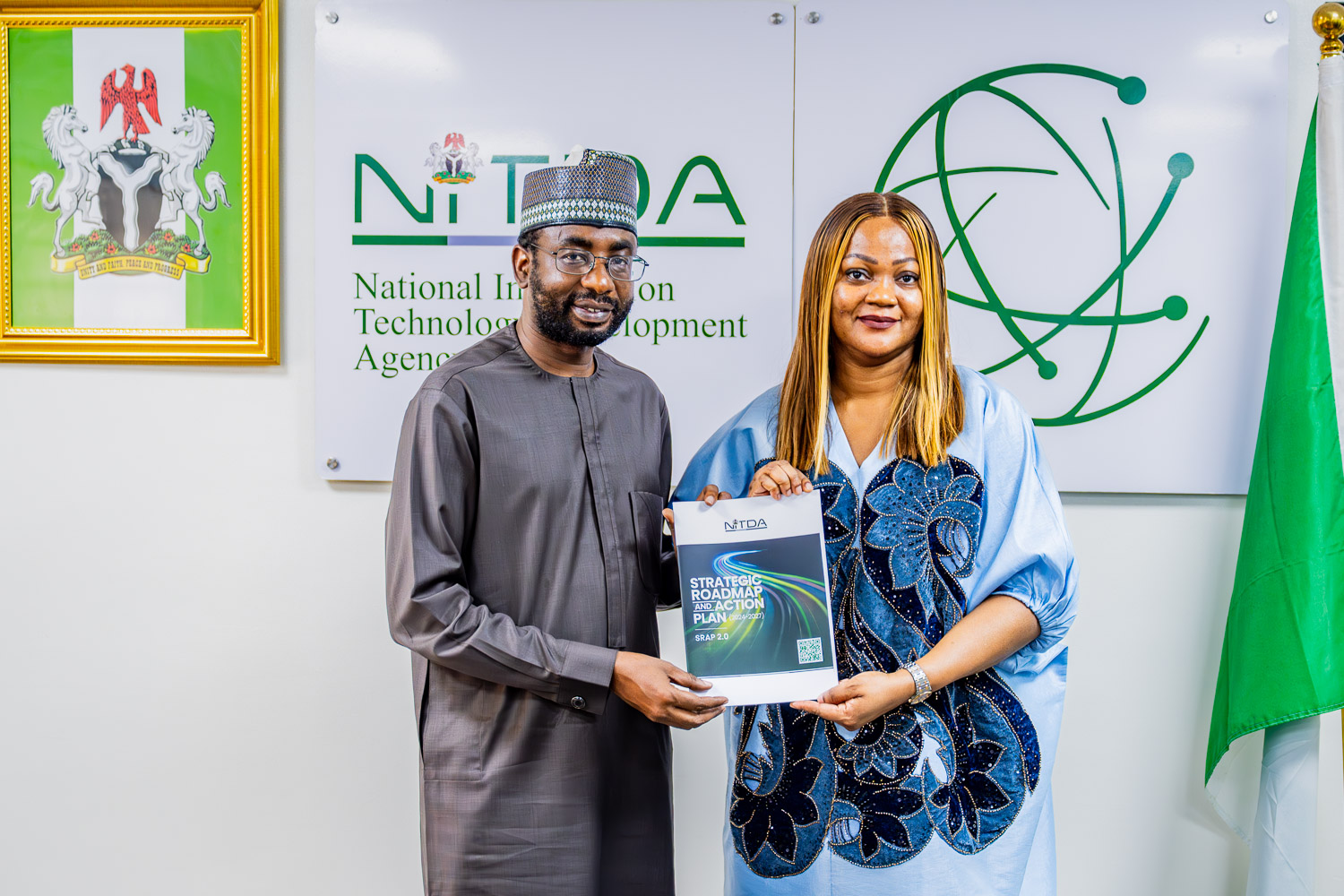
The National Information Technology Development Agency (NITDA) has handed over its Public Key Infrastructure (PKI) framework to the National Identity Management Commission (NIMC) in a move aimed at strengthening the security and integrity of Nigeria’s digital identity ecosystem.
The transfer, which includes the PKI assets, technology and ongoing operations, was formalised during a courtesy visit by the NIMC management to NITDA headquarters in Abuja.
Speaking at the ceremony, the Director-General of NITDA, Kashifu Inuwa Abdullahi, said the handover reflected the agency’s commitment to inter-agency collaboration in advancing Nigeria’s digital transformation agenda.
According to him, NITDA has invested significantly in developing the country’s Public Key Infrastructure and Digital Public Infrastructure (DPI), adding that the agency would continue to work closely with NIMC to ensure a seamless transition of the platform.
He explained that the PKI framework provides the security architecture for creating, managing and verifying digital identities through digital certificates, enabling trusted, encrypted digital communications and transactions.

Inuwa said the transfer aligns with the recently amended NIMC Act signed into law by President Bola Ahmed Tinubu, which seeks to harmonise identity databases across government institutions and position the National Identification Number (NIN) as the primary means of identity verification, authentication and access to government services.
The NITDA boss reiterated that the agency’s mandate extends beyond regulation to driving technology adoption, promoting innovation and supporting institutions deploying digital solutions for national development.
“As Nigeria’s apex information technology regulator, our responsibility is to ensure that technology works for every Nigerian. We will continue to support NIMC and other institutions embracing digital transformation because collaboration is essential to building a resilient digital economy,” he said.
He also described Digital Public Infrastructure as a critical national asset comparable to physical infrastructure, stressing the need to keep it secure, reliable and accessible.
In her remarks, the Director-General and Chief Executive Officer of NIMC, Engr. (Dr.) Abisoye Coker-Odusote, commended NITDA for its support and described the amended NIMC Act as a major milestone in Nigeria’s identity management journey.
She said the new legislation replaces the nearly two-decade-old legal framework established in 2007 and provides the legal foundation for Nigeria’s transition from a conventional identity database to a secure and interoperable digital identity ecosystem.
According to her, the new framework will enable seamless integration across government and private sector platforms while improving the security and efficiency of identity verification services.
Coker-Odusote said the transition from physical identity cards to secure digital credentials is anchored on the principle of “one person, one identity,” ensuring that every Nigerian has a unique and verifiable digital identity.
She added that the commission would implement the transition in phases to protect citizens’ data, strengthen public confidence and ensure the successful deployment of the Public Key Infrastructure and other digital trust frameworks.
Both agencies reaffirmed their commitment to sustained collaboration in achieving Nigeria’s digital transformation objectives.
While NIMC will provide the foundational digital identity infrastructure, NITDA said it would continue to support the ecosystem through policy implementation, regulation, innovation and the promotion of digital adoption across the country.