
Nigeria’s push to build a digitally skilled population is increasingly shifting toward classrooms.
A new round of engagement between the National Information Technology Development Agency and the Universal Basic Education Commission signals a coordinated effort to expand digital access for millions of pupils within the country’s basic education system.
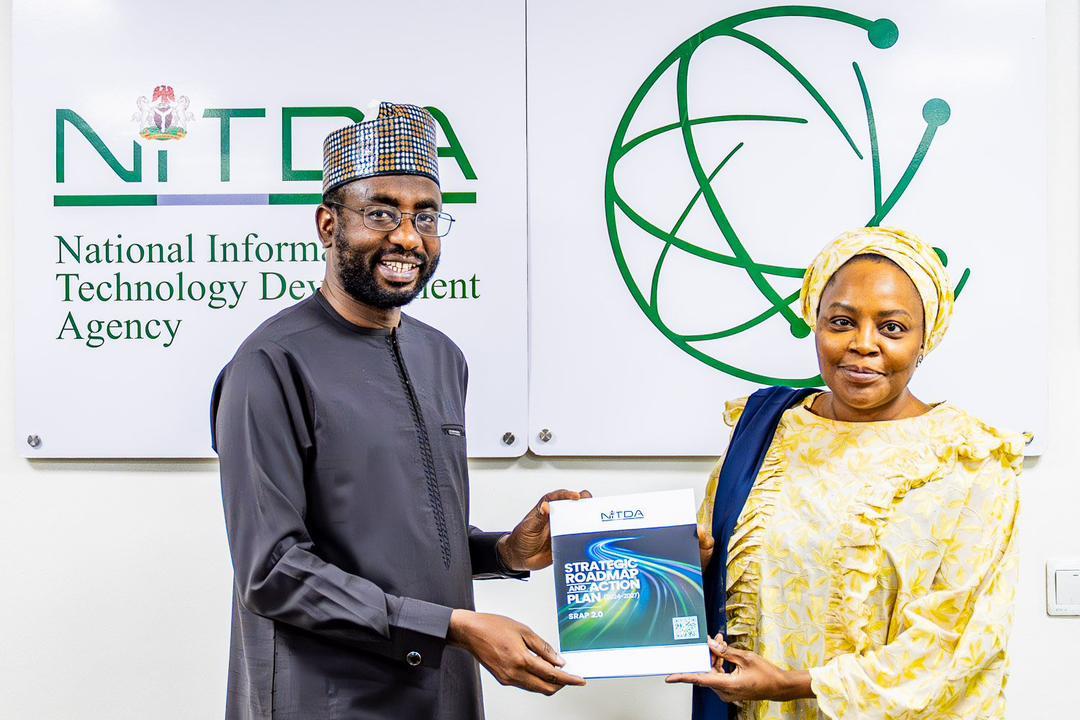
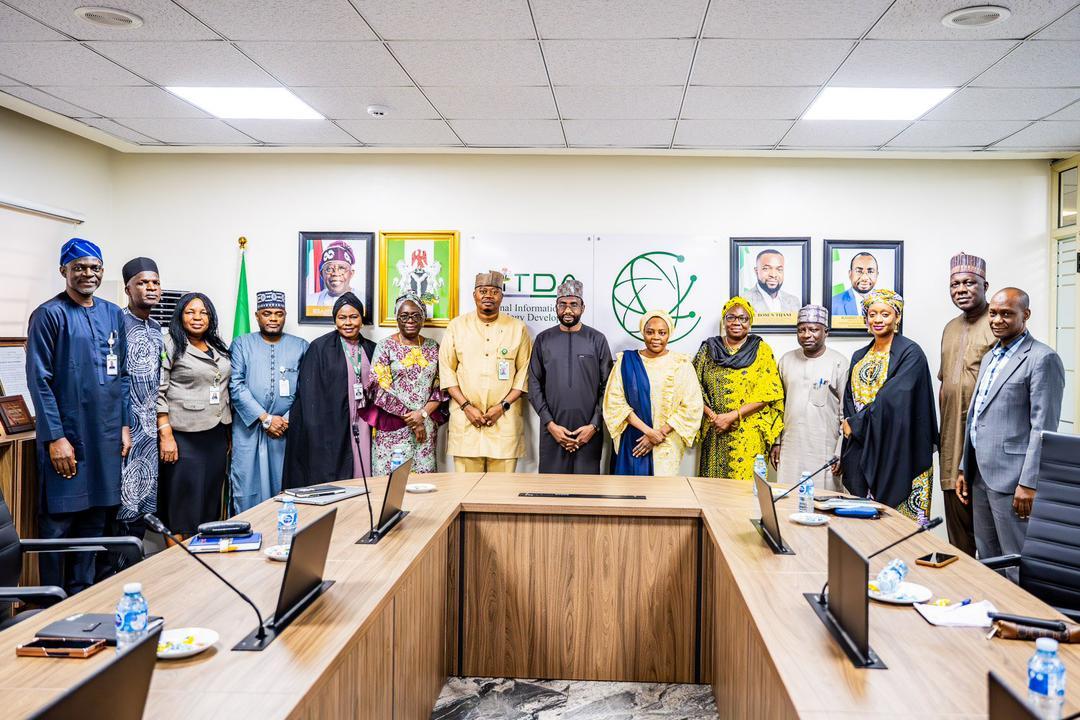
During a courtesy visit by UBEC’s management team to NITDA headquarters in Abuja, Director General Kashifu Inuwa reaffirmed that collaboration between both institutions will determine how quickly Nigeria achieves its national digital literacy targets.
According to him, the country is aiming for 70 percent digital literacy by 2027 and 95 percent by 2030, a goal that requires reaching learners at scale rather than focusing solely on institutional training.
“For us, partnering with you will help us achieve more in terms of reaching all students in basic education,” Inuwa said. He noted that teacher capacity development has already gained momentum through programmes that embed digital literacy modules into educator training, yet he stressed that the next phase must prioritise measurable impact among students. “We have achieved a lot in training teachers, but impact must be measurable. We need the numbers. How many students are being reached?”
Consequently, data and analytics are now central to the strategy. Inuwa explained that technology such as artificial intelligence can help track the reach of teachers and digital programmes across the country.
Accurate records, he said, will enable government agencies to understand what works, identify gaps and scale effective interventions nationwide.
Infrastructure remains another critical pillar. NITDA disclosed that more than 1,500 digital learning centres have been deployed across Nigeria to support inclusive access to digital infrastructure and services.
While some centres are already active learning hubs, others are underutilised. For that reason, the Agency proposed a joint mapping exercise with UBEC to align interventions and maximise the impact of existing facilities.
“We want every Nigerian to have access to digital infrastructure and services,” Inuwa said, urging both institutions to share data and coordinate deployment strategies. He also called for deeper exploration of sustainable internet connectivity models for schools, noting that reliable access remains essential to unlocking the full value of digital learning tools.
Beyond expanding infrastructure and literacy programmes, the NITDA chief offered to share the Agency’s digital transformation framework with UBEC to support institutional reforms within the Commission.
According to him, digital transformation requires consistent improvement rather than one-off initiatives. “Digital transformation is a journey. It is not a one off initiative. At each stage, when you reach your target, you need to set a new one.”
He pointed to NITDA’s internal adoption of artificial intelligence as an example of how institutions can adapt. The Agency trained its workforce on generative AI and encouraged teams to build practical solutions around their daily tasks.
Inuwa stressed that technology should empower public servants rather than replace them. “AI is not here to replace people. If a junior staff member can transition from moving files to managing an AI system, I believe anyone can embrace and use AI.”
Process reforms within NITDA have also reduced administrative bottlenecks, allowing leadership to focus on strategic decisions while technical teams handle specialised responsibilities. According to Inuwa, this shift reflects a broader model of governance that prioritises efficiency, expertise and accountability.
For UBEC, the partnership reflects the scale of the challenge ahead. Executive Secretary Dr Aisha Garba described digital collaboration as essential to improving access and quality across Nigeria’s vast basic education system.
“For us in UBEC, our key mandate is universal access to basic education for all Nigerian children. So, it is a big responsibility,” she said, explaining that the Commission works with government institutions, communities and parents to meet that mandate. She noted that more than 47 million children are currently within the basic education system, underscoring the importance of coordinated national action.
Garba added that working with NITDA will help bridge access gaps while improving learning outcomes. “Partnering with NITDA is a necessity for us. We need to work together to use technology to bridge the lack of access in the country and to improve the quality of education.”
As discussions concluded, both agencies reaffirmed their commitment to deeper collaboration, data-driven planning and shared implementation. The engagement signals a strategic shift in Nigeria’s digital literacy agenda, one that places schools at the centre of building a future-ready workforce and a more inclusive digital economy.