

There’s a quiet question sitting underneath all the noise about tech, AI and digital growth in Africa.
Who actually owns the system everything is running on?
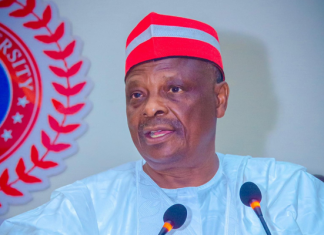
At GITEX Africa 2026 in Marrakech, the Director General of the National Information Technology Development Agency, Kashifu Inuwa, didn’t dance around it because if Africa doesn’t start building its own cloud infrastructure, it risks depending on systems it doesn’t control.
And that dependency doesn’t just sit in tech. It touches money, security, even how decisions get made.
DG Kashifu broke it down in a way that sticks, “In today’s reality, digital is no longer optional; it is a way of life. And the cloud is the oxygen that sustains that life. The question we must ask ourselves is: who controls that oxygen?”
Every app, every transaction, every piece of data is sitting somewhere. If that “somewhere” is outside your control, then so is a big part of your future.
Right now, that’s the reality for much of Africa.
The continent has a huge population and is generating massive amounts of data daily.
Yet, it holds only a tiny share of the world’s data centres and computing power. Which means most of that data is processed elsewhere, turned into value elsewhere, and often controlled elsewhere.
“This is not just a technology gap, it is a sovereignty gap,” Inuwa said.
That word, sovereignty, is doing a lot of work here.
Because this isn’t really about tech pride or trying to copy what the West is doing. It’s about having a say in how your own digital life works. Where your data lives, who can access it and how it’s used.
And right now, that control is limited.
So what’s the alternative?
Inuwa isn’t saying every country should go off and build its own system in isolation. In fact, he said the opposite.
“There is no single country in Africa that can do this alone. We must collaborate,” he said.
The idea on the table is something more practical; a shared system.
Different countries building their own cloud capacity but linking them together so they can work as one network.
Think of it like this: not one giant system controlled from somewhere far away, but a connected setup where African countries still keep control of their own data, while benefiting from scale and shared standards.
It’s what he called a “cloud of clouds.”
If that sounds abstract, the impact isn’t.
It could mean better local tech jobs, stronger startups, AI systems trained on African data, not just imported ones, faster and more reliable digital services.
And more importantly, value staying within the continent.
Data is no longer just information. It’s money, power and leverage.
Still, the window to act isn’t wide open forever.
The longer Africa relies heavily on external systems, the harder it becomes to build its own.
It’s not impossible, but dependence tends to deepen quietly over time, that’s why this conversation matters now.
Not in five years or when the gap is wider but now.
Africa already has the ingredients of a young population, fast growing tech scene, increasing internet access, real innovation coming out of cities and communities across the continent.
However, the missing piece is structure. And as this moment shows, structure in the digital world starts with something most people don’t see.
The cloud; who owns it, controls it and who benefits from it.