
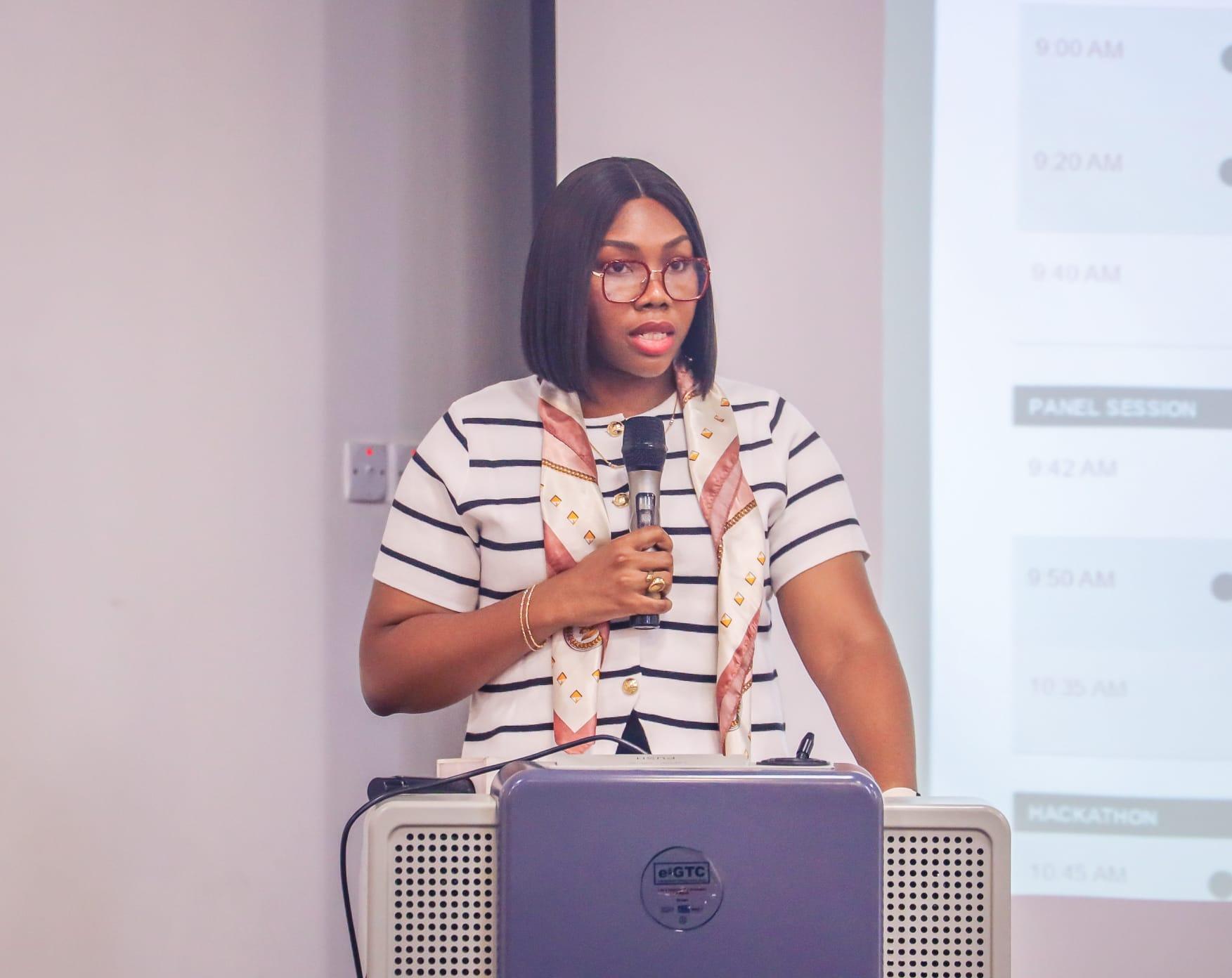
The room was full of young people, laptops open, ideas half-formed, energy everywhere. The kind of room where something real could start or end as just another event.
That tension sat quietly in the background as the National Information Technology Development Agency delivered a message that felt less like encouragement and more like a challenge.
Stop consuming. Start building.
Speaking at an artificial intelligence hackathon in Abuja organised with VibeCode Africa, NITDA’s Director General, Kashifu Inuwa, made it clear that the conversation around AI in Nigeria has to shift. The country is already using technology, but that is no longer enough.
“Beyond literacy, we are now moving into capability. It is one thing to use technology, but another thing entirely to build with it. Today, we are challenging you to build,” he said.
That distinction matters more than it sounds.
Right now, most people interact with AI as users. They download tools, test features, automate small tasks. Useful, yes. Transformational, not quite.
The real value sits on the other side, with those who understand how to create, shape and deploy these systems.
Nigeria, with more than 60 percent of its population under 25, is in a position many countries would trade for. A young population, curious, connected, and increasingly exposed to global tools. The question is whether that population becomes a workforce that builds solutions or one that depends on them.
“As you can see, this room is filled with young people, this represents a powerful opportunity for innovation and digital skills development,” Inuwa said.
The urgency behind that statement becomes clearer when you look at what AI is already doing. It is reshaping industries, changing how governments operate and quietly redefining what work looks like. Countries that build in this space set the rules. Countries that don’t adapt to them.
For NITDA, the answer is not abstract policy. It is skill.
Through initiatives like Digital Literacy for All, the agency is working toward a target of 95 percent digital literacy by 2030. However, even that is only the starting point. Being able to use technology is different from being able to create with it.
That is why the focus is shifting from access to capability, from awareness to output.
Inuwa urged participants to look beyond applause and prizes and focus on problems that actually need solving. Healthcare access in rural areas. Gaps in public service delivery. Agriculture inefficiencies. Education. Financial inclusion. Misinformation.
These are not distant challenges. They are visible, daily, and often frustratingly unresolved.
He also added a caution that often gets ignored in the excitement around AI. Building fast is easy. Building responsibly is harder.
“As we explore AI, we must be mindful of ethics, data protection and inclusion. Building responsibly is just as important as building brilliantly,” he said.
That balance between speed and responsibility will shape what kind of ecosystem emerges.
For VibeCode Africa’s founder, Lola Adey, the starting point is even simpler. Don’t wait for instructions. Look around you.
“We’re not going to give you any industry. We want you to dig deep into yourselves. What are the problems you are facing? What are the problems your brothers and sisters are facing?” she said.
That approach changes how innovation happens.
Instead of building for headlines, participants are pushed to build from lived experience. Power supply issues. Insecurity. Broken systems. Everyday frustrations that people have learned to live with.
“With artificial intelligence, you now have something in your hand that you can use to actually solve problems. You don’t have to wait for anybody anymore,” she added.
That line sits differently when you think about it, because for a long time, the story has been that change has to come from somewhere else. Government, foreign investment and big companies.
Now the tools are closer but the real question is what people choose to do with them.
NITDA’s position is clear. The future of AI in Nigeria will not be imported.
“The future of AI in Nigeria will not be imported. It will be built by people like you in rooms like this,” Inuwa said.
The room will eventually empty. The laptops will close. The event will end.
What remains is whether anything built there survives outside it.